
Facts
- Elevation: 2,722 m (8,930 ft)
- Prominence: 2,722 m
- Ribu category:
 Tinggi Sedang
 - Province:
 Nusa Tenggara Barat
 - Island: Sumbawa
- Coordinates: -8.2466, 117.9588
- Rating:

 (35 votes) Add your rating
 Loading...
 - Other names: Tamboro
- Eruptions: 1812-15, 1880, 1967
- World Ribus ID: 69017
Photos





Bagging It!
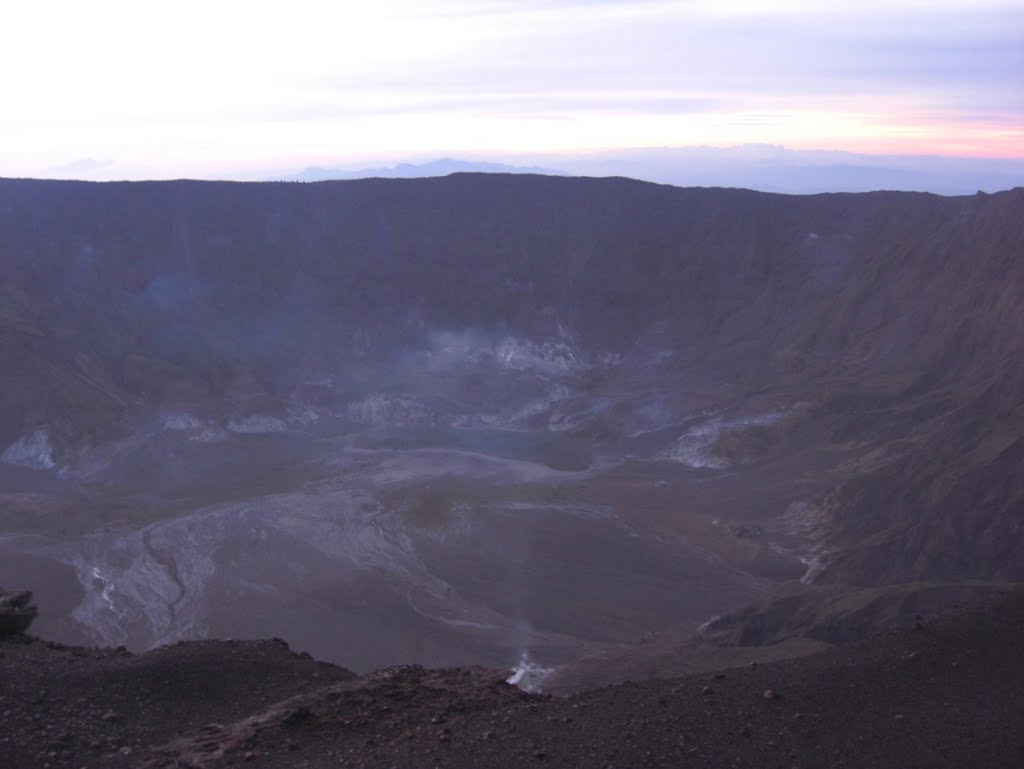
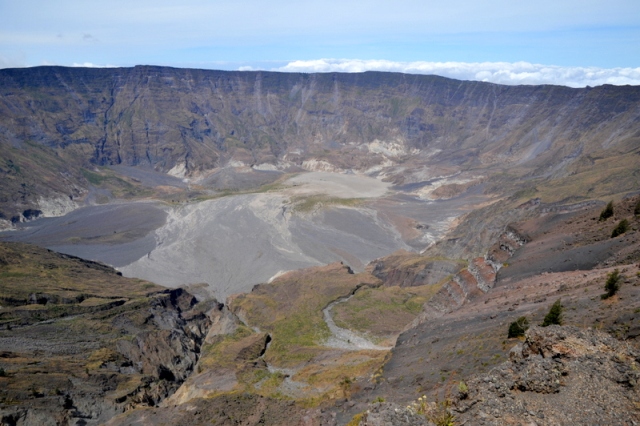
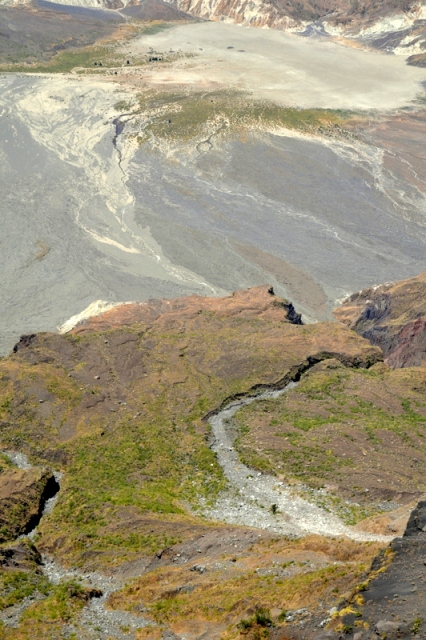
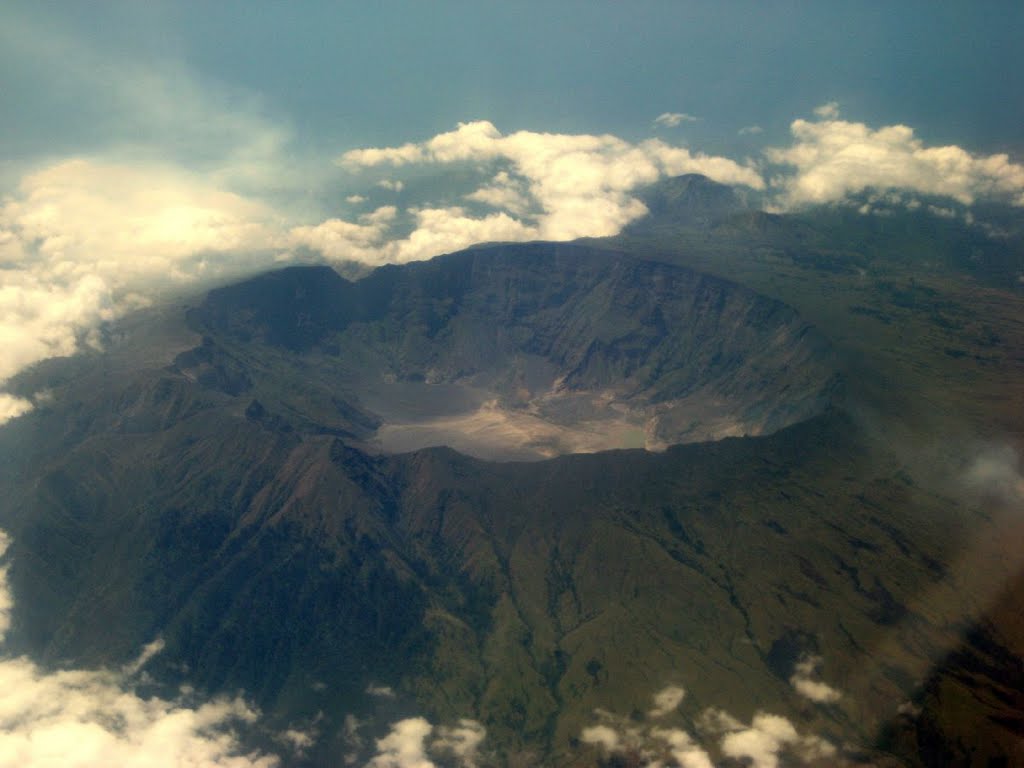
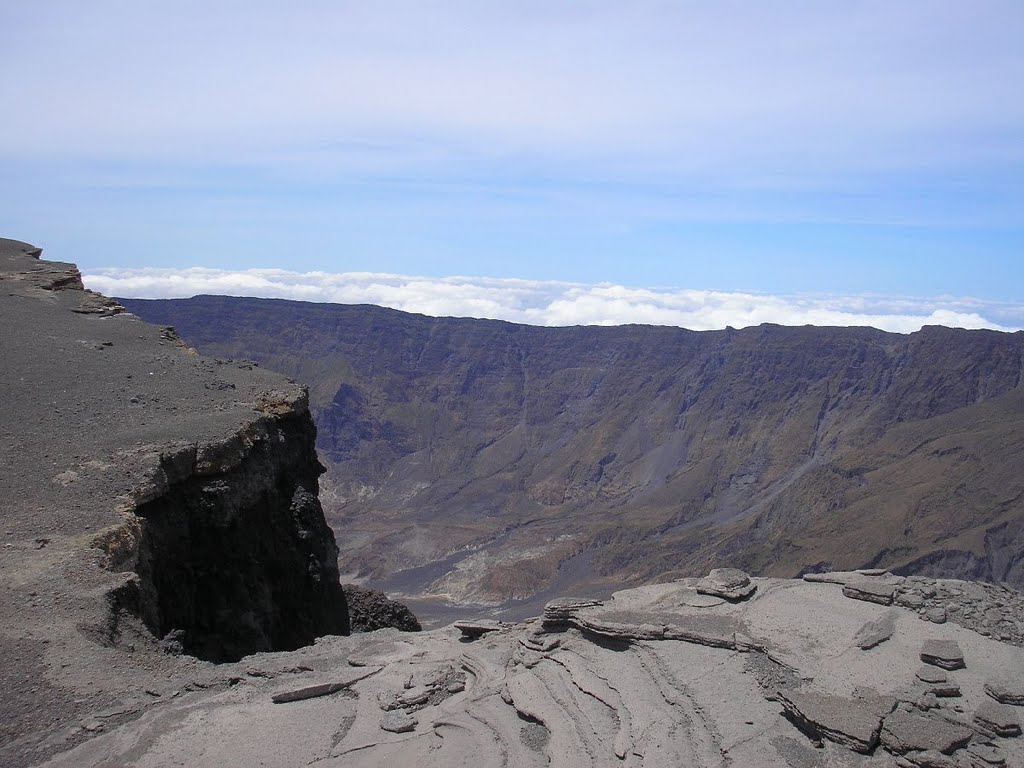
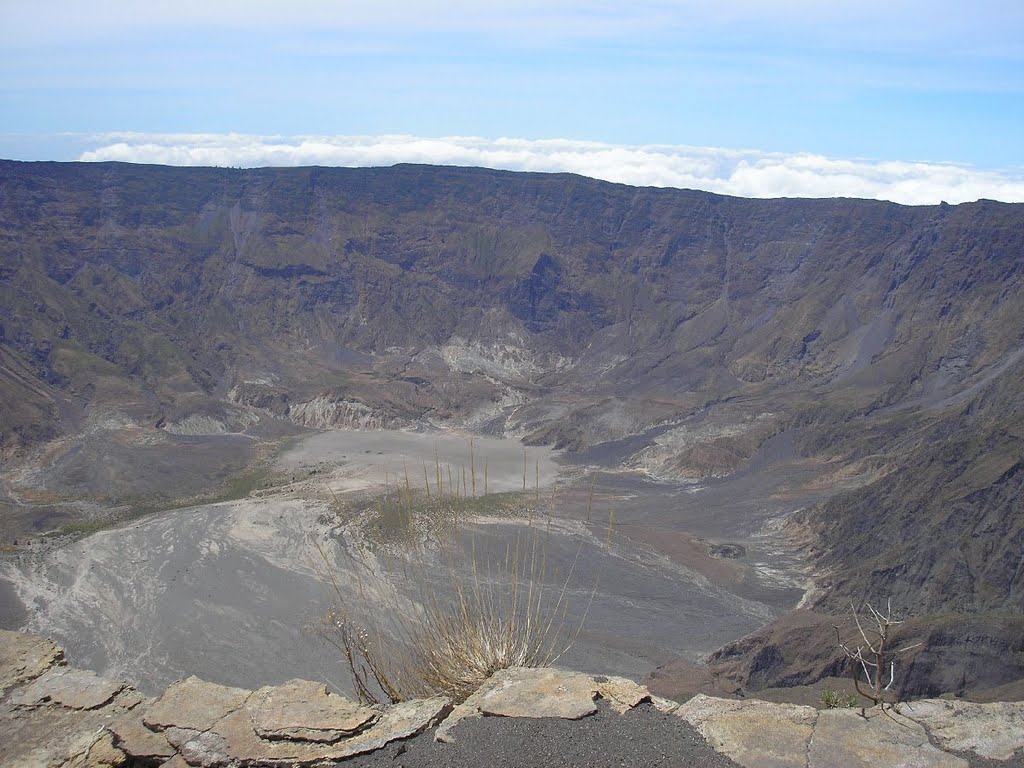
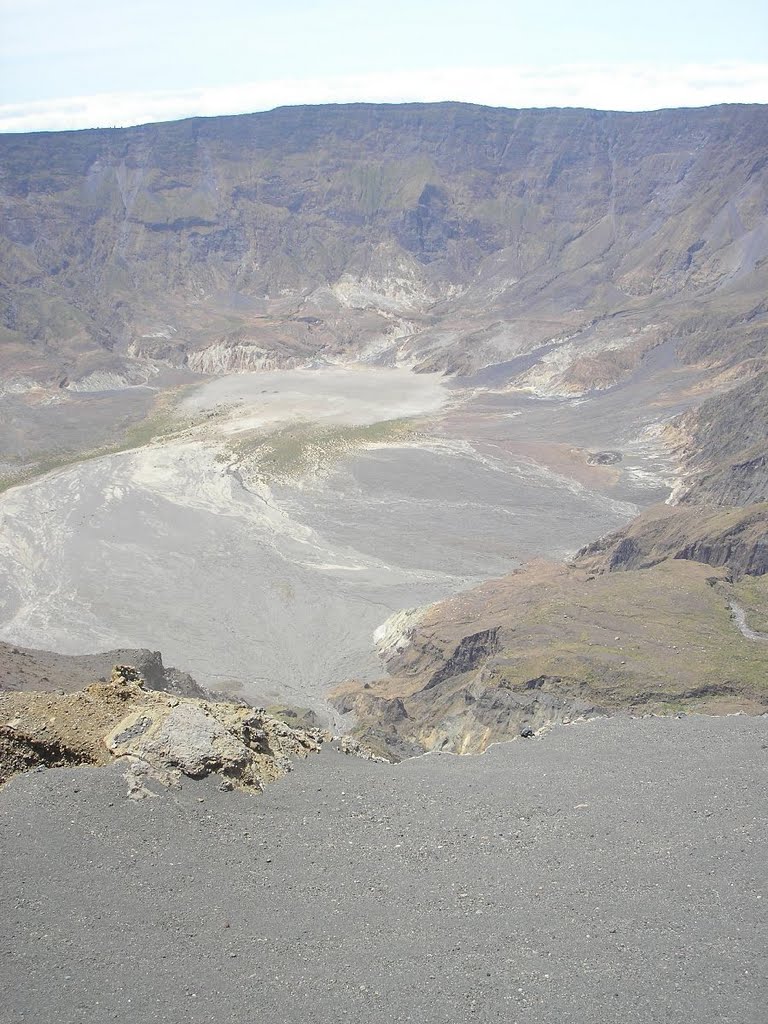
This Ribu is the site of the largest volcanic explosion in recorded history. In April 1815, the volcano erupted so violently that it was heard over 2,000 kilometres away and 71,000 people were killed. 160 cubic kilometres of fragmental material ejected in the explosion was responsible for 1816′s ‘Year without Summer’ around the world. It is no surprise, then, that the crater is enormous – over 7 kilometres in diameter. Thankfully, the volcano has calmed down considerably since the world-famous eruption.
Tambora is on the island of Sumbawa, which is served by unreliable daily flights from Lombok. There are now several official routes to the crater rim, but they vary in quality and popularity, and only two will bring you out near the true summit.
The most popular route is from Pancasila which lies to the north-west of the volcano. Getting to the starting point is an adventure in itself. Bima is the closest regional airport but, to be on the safe side, you may want to take the ferry over from Lombok. Once on Sumbawa, if you have a large group, you may perhaps even wish to charter a boat from the port of Badas to take you directly over (6 hours) to the small logging town of Calabai instead of the 8 or 9 hour journey by road.
The Tambora office (where you get a permit) is in Pancasila (474m) next to the village field and it is recommended that you take porters from Pancasila rather than Calabai. It takes just under one hour along very bumpy roads to reach Pancasila from Calabai.
You can start the long trek to the crater in Pancasila itself, but better still arrange for a truck to take you up the track as far as it can go. In previous years, the hike was much longer but the trailhead is now at an elevation of around 700m. From the end of the track, where there is a small warung, it is a long 8 or 9 hours to the crater rim. Because the trail starts at quite a low elevation, the first few hours of hiking through jungle are hot and sweaty. There is a source of clean water about an hour from the start of the trail.
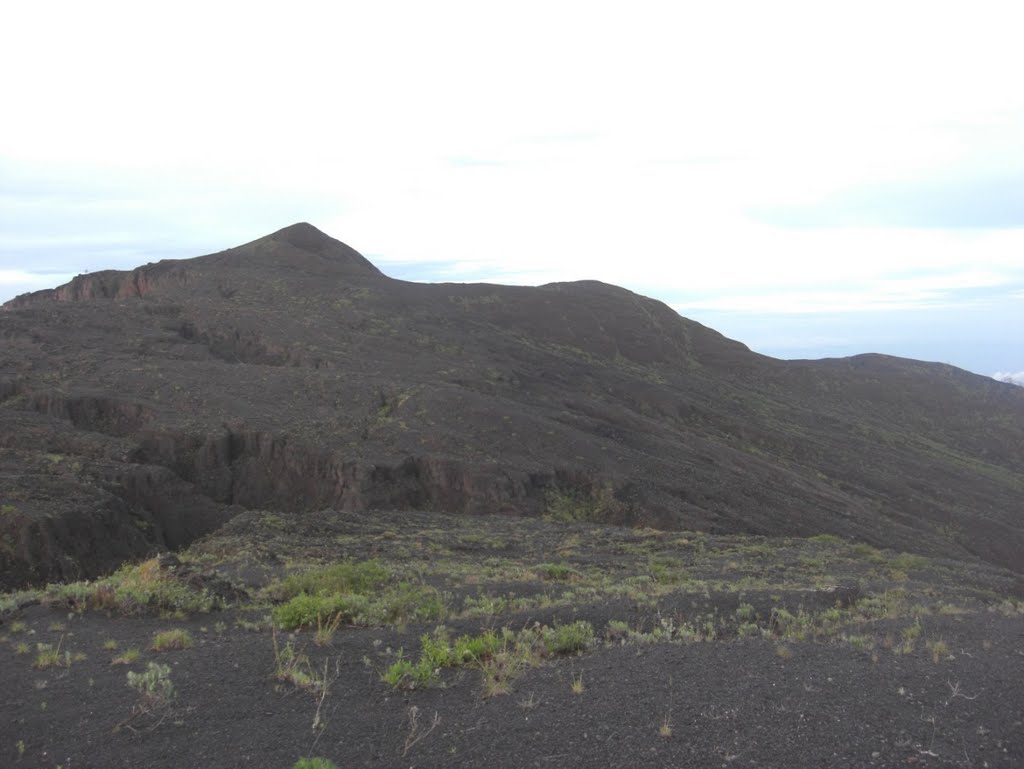
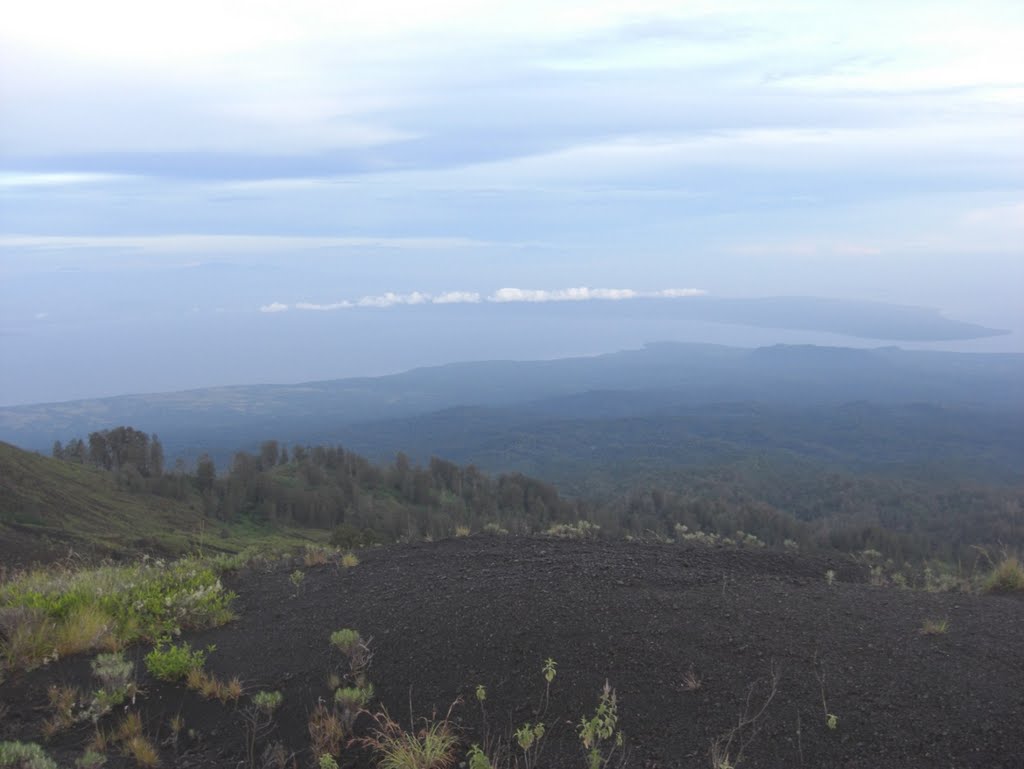
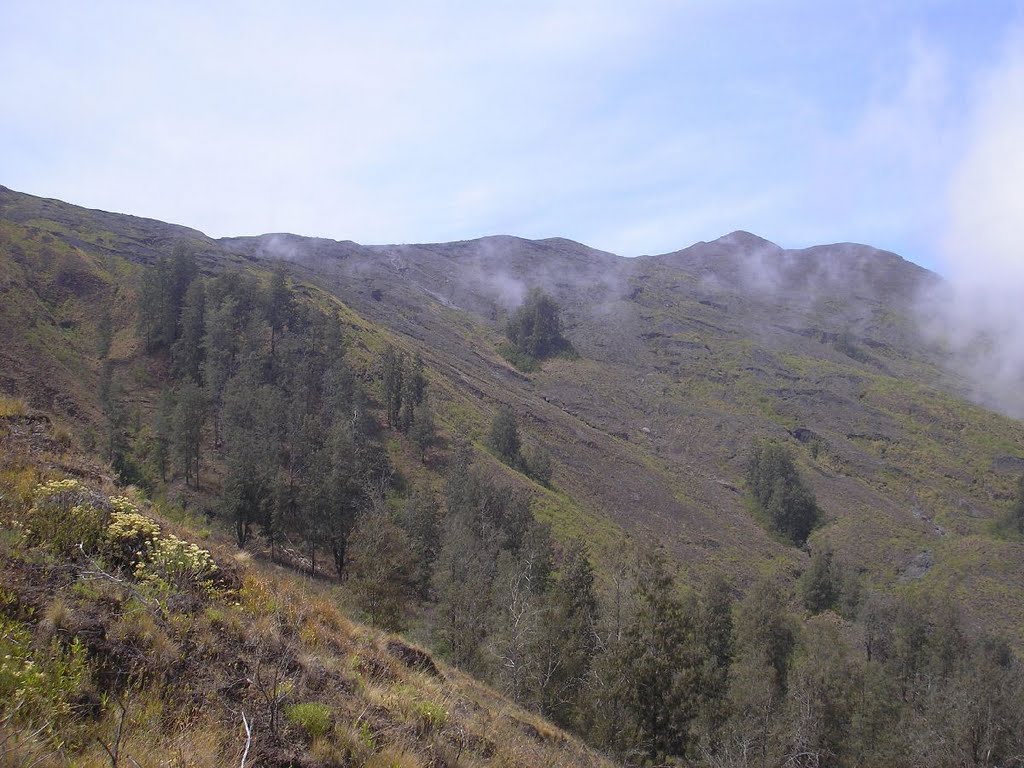
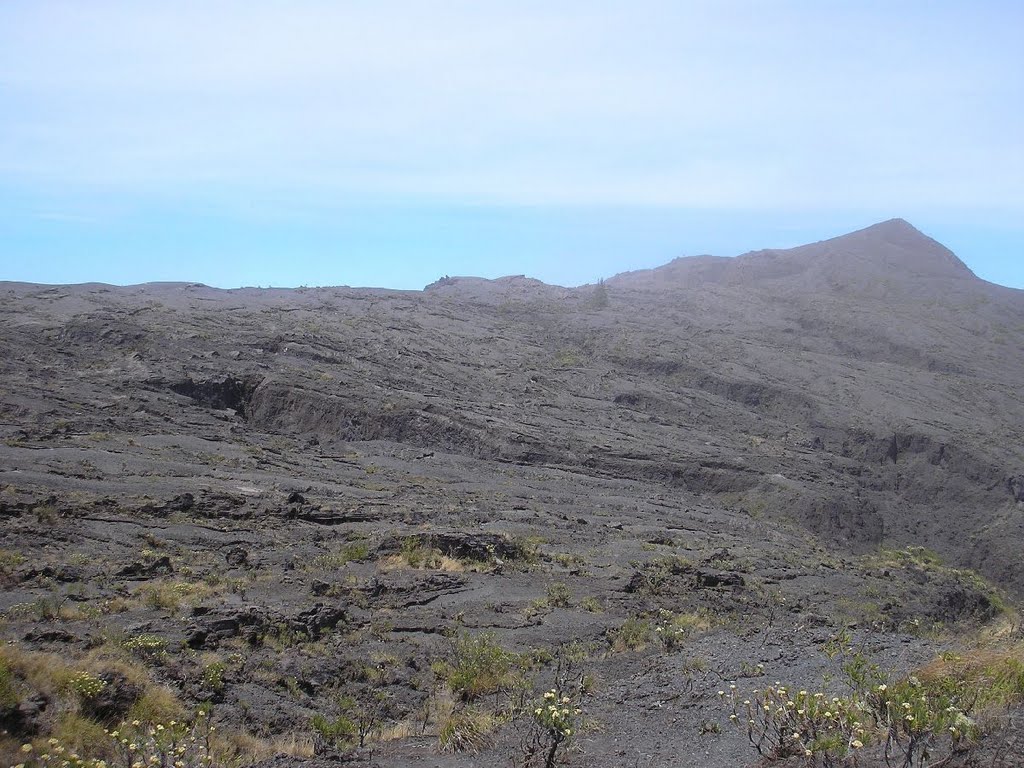
The route leads via Pos 1 (1,080m), Pos 2 (1,320m – water available), Pos 3 (1,630m – water available), Pos 4 (1,800m), Pos 5 (2,060m) before reaching the crater rim at around 2,638m. If you can’t manage to start early in the morning, the best thing to do is to camp at Pos 3 (5 hours from the trailhead, nearby water source) or Pos 5 and then have a second night on the crater rim itself. Once you emerge from the forest, the vegetation becomes less and less and you can look back to the nearby coast and onward across the black volcanic sands.
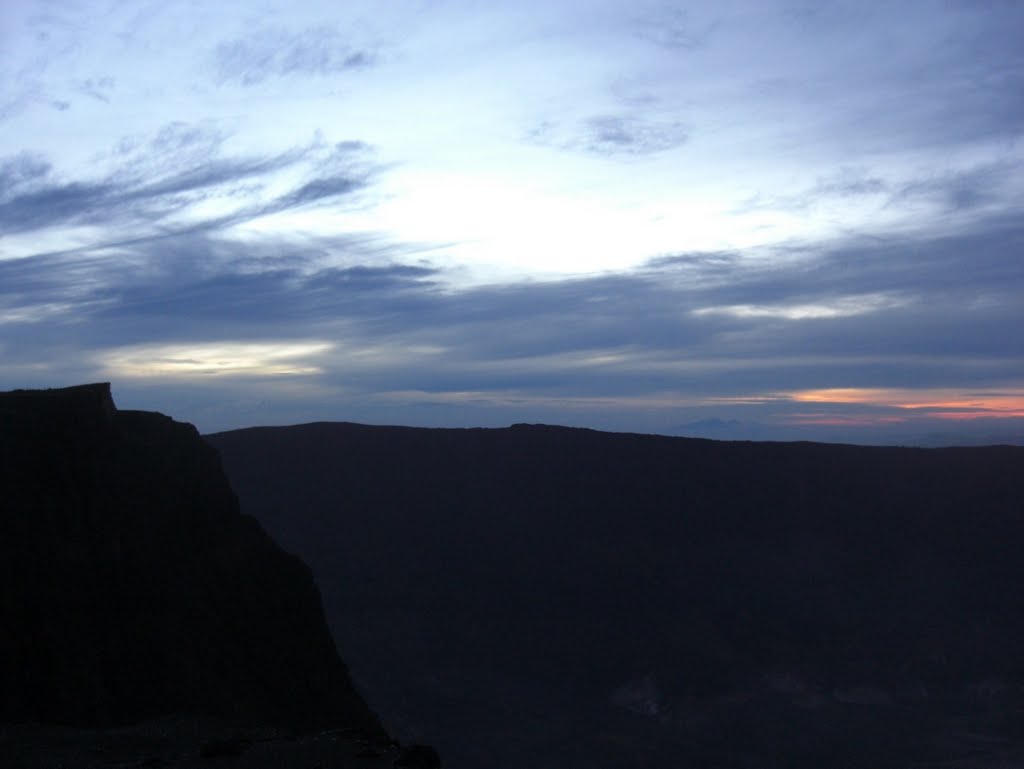
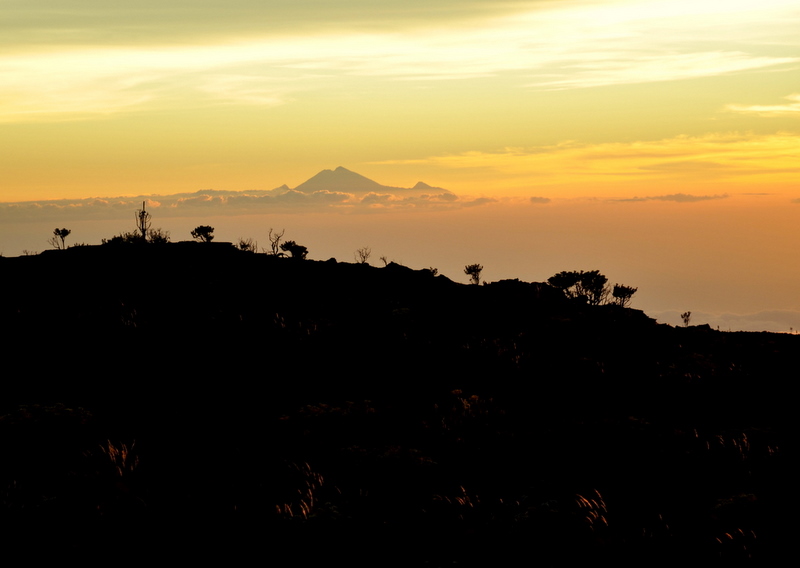
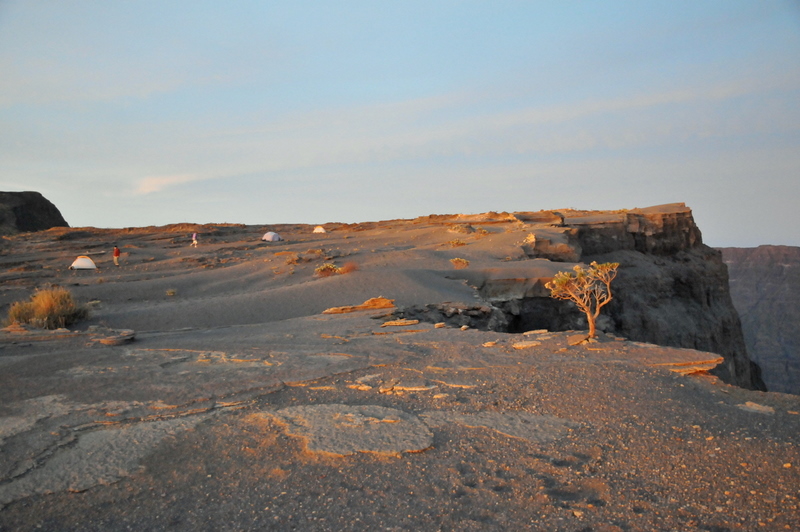
There are plenty of sandy areas suitable for camping near the top but be warned it can get quite windy and difficult to keep tent pegs firmly held in place. The crater rim is one of the world’s most fascinating places and the views at sunset over Gunung Rinjani (Lombok) are fabulous. As for the incredible size of the crater itself, photos cannot really do it justice. The highest point is on the western edge of the crater and is marked with a cairn and Indonesian flag. Be careful when walking out there because certain areas are not stable and there are one or two fairly deep rock trenches.
The route up is the best route back down again – fast hikers will be down at the trailhead in 6 hours.
A second route leads up from the south-west at Doropeti (23m) but most vehicles will be able to get beyond the village of Gunungsari (200m) to the end of the road near a water source (278m). From here the trail leads via Pos 1 (1,015m), a second water source (1,110m), Pos 2 Pondok Berburu (1,210m), Pos 3 (1,923) which is the best camp spot, another water source (2,360m) before reaching the rim south of the summit.
This trail can be combined with the Pancasila route as they meet on the crater rim near the summit.
A third route leads up from the south at Doroncanga (41m) and depending on the vehicle, the quality of trail and the weather you may be able to reach quite high up the side of the volcano in a truck, 4WD or on a trail bike – as far as Pos 3 according to some reports. Be aware that water is hard to find on this route so be sure to bring plenty and assume none available on the trail.
The trail leads via Pos 2 (983m) and Pos 3 (1823m) which is the best spot to camp. Beyond Pos 3 is the crater rim which on this southern side is at an elevation of around 2,400m and is just 3 hours of hiking from Pos 3.
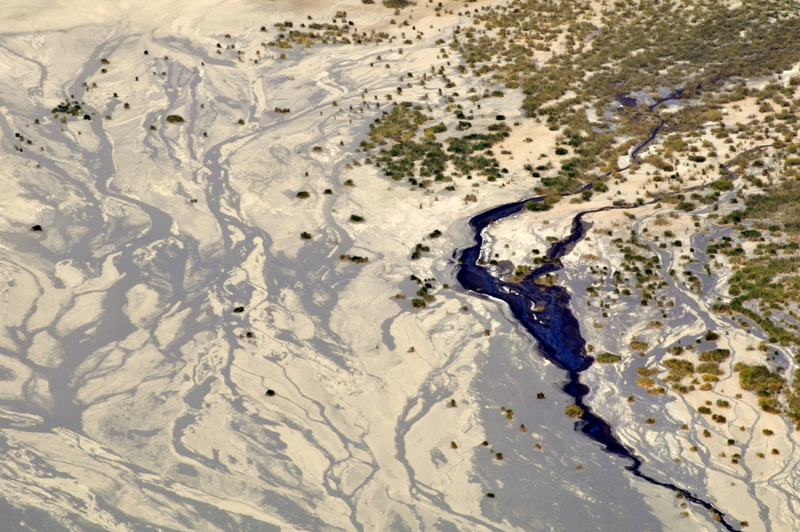
Although the true summit is almost impossible to reach from this southern side of the rim, this trail has an advantage for those who have gotten permission to spend an extra day or two descending into Tambora’s crater itself! The best route down appears to be from less than 1 kilometre west (left) of where the trail reaches the rim and leads via cliffs (1,770m) before reaching the vast caldera floor (1,404m). Such an expedition is only possible for the very experienced who have already sought permission from local officials.
There are other official routes in from Kawinda To’i in the north and Piong in the east.
Bagging information provided by Daniel Quinn
Trail Map
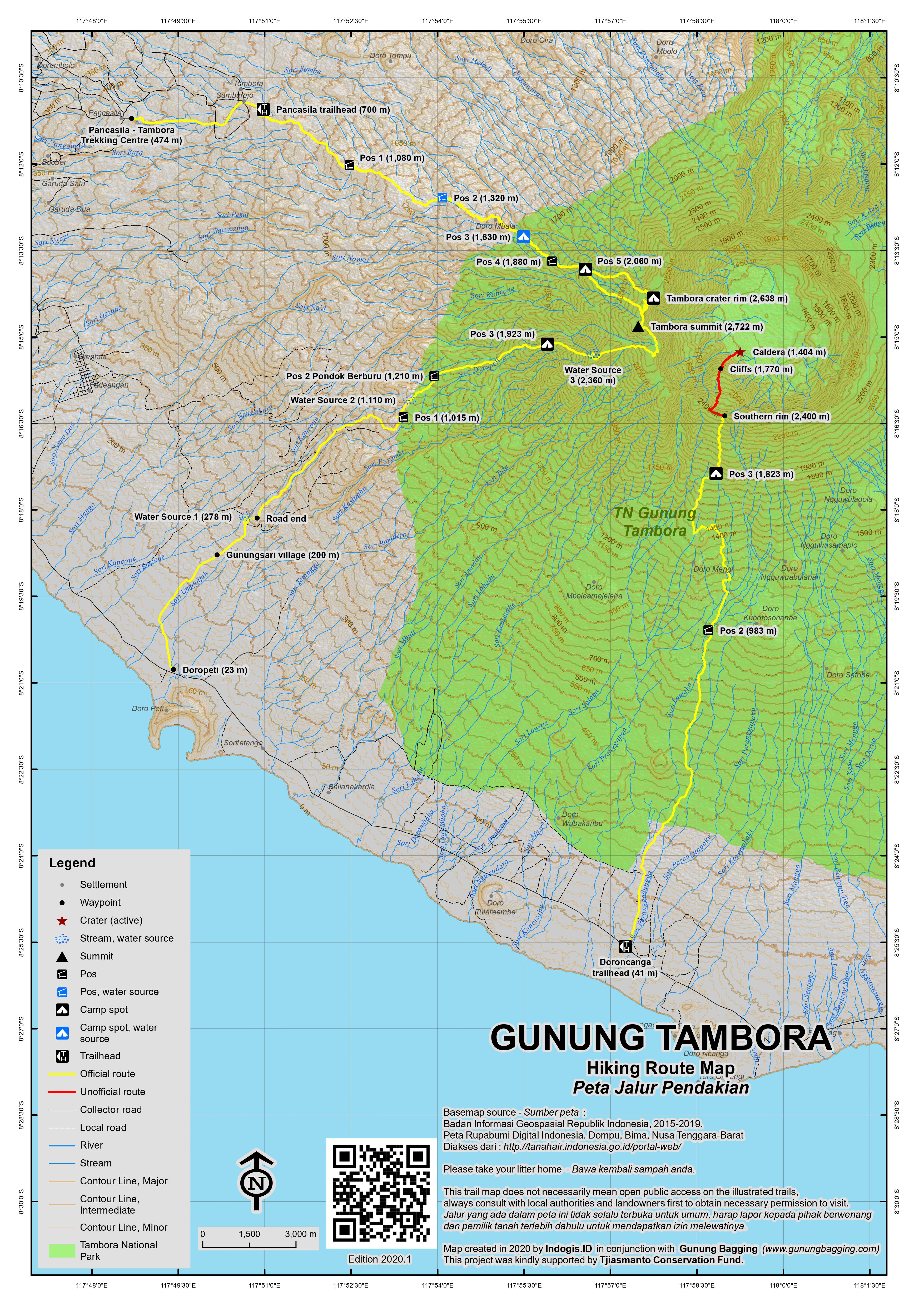
For a high quality PDF version of this and other trail maps, please download from our Trail Maps page.
Practicalities
- Getting there: Difficult, but lots of options. Fly to Bima or Sumbawa Besar or take a ferry over to from Lombok, then take public transport. Allow lots of time to do this. If you can, it is best to go with a group on a tour bus to save time.
- Guides and GPS Tracks: Want a PDF version for your phone? Looking for a guide? Need GPS tracks and waypoints? Gunung Tambora information pack can be downloaded here.
- Trip planning assistance: Would you like Gunung Bagging to personally help you in arranging your whole trip? Please contact us here.
- Permits: You are required to register at the Pancasila basecamp. In 2018, Rp5,000 per day for locals and Rp150,000 per day for foreigners – even those who live, work and pay taxes in Indonesia.
- Water sources: Available at Pos 2 and usually near Pos 3 on the Pancasila route. If your guides are uncertain about there being water at Pos 3, best fill up at Pos 2. Available at 278m, 1,110m and 2,360m on the Doropeti route. None available on the Doroncanga route and unknown for the other trails.
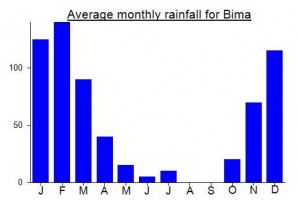
Local Average Monthly Rainfall (mm):
Location
Click on the blue arrow  (top right) to see your current location on the map
Gunung Tambora
Incredible Crater and terrible people and total rib off
For the past 15 years, I hike volcanoes across Indonesia from Aceh to the Maluku’s and “almost” always returned with incredible memories. Unfortunately, our latest trip to Gunung Tambora will be in our memories for very different reasons. Living and loving on Bali for the past 27 years I am very familiar with traditions and culture.
Total Rib off
The Tambora experience starts at the Airport in Bima where transport is just about twice as expensive as on Bali. Next, we arrived in Pancasila at the Taman Nasional Tambora registration office. Unfortunately, the office was closed but there was Pak Bento an about 30-year-old local gangster which immediately offered us a motor bike ride up the 5-km dirt track to Kampung Bali where the trail head starts. Normal charges Rp.50’000, we were charged Rp.75’000. He brought us to Pak Eric a Duch National which we unfortunately not meet. Eric normally organizes porters and logistics. We then meet a Balinese Family which kindly offered us a corner in their house to sleep. Their kind hospitality was incredible. We then payed Pak Bento Rp.300’000 to organize us 2 guides for the hike the next morning and for registration to the national park. It was confirmed that he would be back the next morning with two porters at 6.30……Well it was then 8am when he arrived. Father and son. Then son looked rather young but Papa a shored that he is as strong as an ox. Shortly after 8 we left and as always, the porters took off like turbo charged whatever. After the first hour hiking we were on par and after we hiked 3 hours we had to wait for 1 ½ hours for the Father son team. We’ll all still ok as we were in no hurry. We spend the night in Pos 5.
The next morning under crystal clear we departed at 3 am together the porters son. We ask him to carry my back bag which was very light and only filled with my tripod and a few bits and pieces to take pictures. Once again for the first hour he almost run up the mountain. Run for 10 minutes and waited for us. Then ½ way up to the summit we past a group of local hikers which camped an hour below the summit. We then made our way slowly to the crater rim to be well before sunrise on the summit. I was very keen the get some shots well before the sun come up. To take the shots I needed my tripod, but unfortunately our porter was missing. I then run halve way back found our porter which looked or played rather exhausted. I garbed the bag, run back up the mountain and got my shot.
Then after a most enjoyable time on the summit we were back at the camp sit at 9am.
PORTERS GONE.
Now this was bad news as we were left with 25 kg of luggage each. There was no choice and we carried all our gear a very very long way back to the base where we finally arrived at 7pm. Once again PAK BENTO promised he would wait for us and bring us back to the Pancasila. Well of course he was not there as he was well aware of the fact that the porters left us on the mountain.
The moment we arrived back at the Rangers office the National Park ranger was waiting for us to present an entry fee to the park of Rp.600’000. Now as we both live in Indonesia and have permanent residents we always get the same treatment as Indonesians. Then after all I pay a healthy sum of tax to Indonesia. Again, the ranger was not at the slightest interested and demanded that we pay full rate. He was also kind enough to mention that the Tambora National park is not in the slightest interested to welcome foreigners to their park. So please stay away and climb volcanoes in Flores or Lombok.
Somehow, we made it back to the airport in Bima where we plastic wrapped our bags for protection. The singe at the packaging station reads clearly Rp.40’000 and when we played with Rp.50’000 the Clark mentioned that he would not give back any change as he does not have any and would use the change to buy coffee and cigarettes………
Never ever will we return back to Gunung Tambora but will do anything to prevent other travelers to go through a similar experience.
Sorry to read this report, Heinz. Not the first negative report on the people of the Tambora area, not by a long way! Hopefully you got some good photos. Eastern Sumbawa is not a favourite place of mine either, for similar reasons. But I do hope to return for a couple of smaller mountains near Bima. The rules about foreigners entering national parks and having to pay ten times the price even when they live, work and pay tax locally seem to be applied in some places but not others. Kawah Ijen is one where I recently found the office staff rude and uninterested. It seems like it can depend on who you speak to, whether they are a decent and humane person or just a jobsworth money-grabber.
Thanks Dan. With porters we normally barges hard and when they do a great job we often pay twice as much as we negotiate. I certainly got the shot from the summit. Next mountain will be once again Krinci
I organized the trip with Pak Saiful in Pancasila. Everything worked well. Dont expect guides that come close to what you expect to be a guide, but I got a reasonable one. When coming down to pos kebun kopi we also had problems to get our transportation back to Pancasila, but with an additional walk to the next houses we could organize it. In my opinion Tambora is really worth to be climbed. I enjoyed it a lot.
I have just returned from climbing Tambora via two different locations. Me and New Zealander, Mike Betts, rode our KLX150s to Soriutu, the tee intersection where you turn left to head to Pancasila.
At Homestay Fidayah we met the manager who told us of an alternative route from Piung about an hour away to the south east. We had been intending to try from Doro Ncangga which is 57 km from Soriutu on the road to Calabai/Pancasila. I previously tried 3 times to get up to Pos 3 from Doro Ncangga but failed as I was on my own and the track was too tough. Also experience clutch slip and bad weather. So we decided to give Piung a try.
We set off early next morning. The road was good. About 90 minutes later we headed off road to begin the 22 km ride to Pos 3.
At first we got lost. The track left led to a sand mine. We went back, took the track that went straight on and we were on our way. To Pos 1 it was pretty easy. After that there were some steep sandy sections. I had a couple of spills.Two kms past Pos 2 I took a wrong line and got jammed. It was here that my clutch failed completely. I was hoping it was just overheated but alas, after waiting an hour and trying every level of adjustment, there was no movement at the back wheel
So, I jumped on Mike’s bike and, with great skill he got us back to Piung. We went to the village motorbike shop. No spare parts. A young bloke said we should go to the Park Office. We had no idea there was one there. It was only 200 mts away. We had missed it because the sign is not by the roadside – it’s tucked away in the yard!
There we met Pak Rachmat Hidayat and explained our situation. He explained that his men and vehicles were out fighting a fire and would not be back till late but that he could organise a bike rescue next day. He fed us and gave us his room to rest in.
That night all the staff returned and they planned our rescue for the next day. After breakfast we left in the Park’s Mitsubishi Triton 4WD piloted by Pak Abdullah accompanied by 3 staff. His driving skill was exceptional. After 90 minutes we reached the bike, loaded it and headed back down. There were no spare parts in Piung so Pak Saburuddin kindly authorized the Park’s vehicle be used to transport the bike and me to Soriutu. I bought a couple of cartons of cigarettes for our rescuers and off we went to Soriutu to Fidayah Homestay. Before parting company with Pak Rahmat and the crew we invited them to eat with us at a Nasi Padang. We had a good feed and said our goodbyes
I will never forget these people. They were so good to us. Apart from paying the National Park fee never once were we asked for money.
They treated us so well.
In Soriutu the second bike shop we visited had the clutch plates. An hour later the bike was good again.
Next day we headed for Doro Ncangga. We headed into the Park at 8am. The track was pretty chewed up in parts and I had a few minor spills. When we got to Pos 2 at 900 mts I thought it best to leave my bike there and continue on foot while Mike rode on to Pos 3. I made the 7km to Pos 3 in 2 hours. Mike JUST made it up. There were a few spots where he had to dismount and walk beside the bike. At Pos 3 (1800 mts) we rested for 30 minutes.then set off for the final two hour climb to the crater. The track is not well defined – just keep heading up. You can see Pos 3 most of the way but if cloud came over you might have trouble finding it.
I found it pretty tough but I’d already climbed 900mts from Pos 2 to Pos 3 and I’m 70 years old so I guess it’s ok to feel completely done in! We spent 30 minutes enjoying the view before heading back to Pos 3. We got back at 5pm. Some locals were there and we were given hot coffee. It was sheer bliss. We ‘slept’ in a berugak that night. The wind howled all night. The Keruak shook. The tin roof rattled. I got about an hour of sleep. I was back on my feet and walking again at dawn. I rendezvoued with Mike at Pos 2 at about 7.30 fired up my bike and we headed back down to report to Park Headquarters. By 11 we were back at Fidayah where we washed the grime from our bodies. Refreshed, we then had another magnificent meal at a Nasi Padang, fuelled our bikes and headed back west for the 4 hours ride to Kencana Beach Hotel to rest up before heading back to Kuta Lombok next day
I cannot speak highly enough about the people we met on this trip. They were wonderful to us and we left with great memories of this adventure
WOW! Great story. And mind blown when I got to the line “and I’m 70 years old so”… I agree about the people here. Of course there are some jerks and lazy bums but my 7 years here has been overfull with generous strangers and kindness. I have been tooling around on a KLX 250 and had some similarly hairy off piste adventures- but then I am a mere child of 60!
Here is a link to a short video that Mike Betts took of our trip. The title is an oblique reference to the crazed Dutchman we met at Kencana Beach Hotel at the end of the trip. He as totally paranoid and subscribed to every conspiracy theory ever circulated.
https://drive.google.com/file/d/1LHzb9VOaoq1F3EbazrGMj1z51PYgXD0k/view?usp=sharing
Mount Tambora. Hiking Pancasila
Here is the official track
which is often used by
Mountaineers generally
to climb the mountain
Tambora, both climbers
Local or climbers from outside
Dompu even climbers
foreign countries. There is a
registration for climbers.
The climb begins at the point
600 meters above sea level. from where
This registration can climber
choose to walk or
ride motorcycles up to the frontier.
Rates per-ojeknya Rp
20.000 – Rp 25.000, suggested
to ride motorcycles just because
track here long enough
and draining and
can save time
climbing. along
journey through the garden
Coffee for the area between
where registration and limits
forest is arable land
people, some
a small village which comprises
of some houses also exist
Coffee farming is.
From the woods to the door of the post I
lane dominated by tracks
and occasionally climb ramps,
along a path filled
and a tree-creepers
tree that season
rain can close the path.
This path is also used by
society as a pathway
irrigation because there is a water pipe
drink. Effective time
can be taken for up to
to the post I was 2 hours. Well
reservoirs of water pipe
in Heading I, shelter already
nothing in this post, climbers
can only rest on
under the trees. Should
when up soon
examine the foot and part
Other body because it
No leeches.
Still with vegetation
together, traveling from Pos I to
heading II track sloping
one t anjakan enough
Long, approaching Post II
trees have very
lush and. Pos II is located
near a river
very clear and cool,
shelter is still there and pretty
well here hikers can
use this water for
drinking and cooking. To
Pos II can trip
taken within 2 hours.
Trek uphill starting from
Here, from the Post II passes
river then uphill
along the mountain ridges,
only occasionally track ramps,
the trip will be very
challenging because tree-
green tree and
big. Ahead Post III vegetation
is mixed because
already there is a pine tree.
Postal III at an altitude of 1300
masl characterized by soil
roomy and shelter
very good condition, may
accommodate 10-15 tents
size 4. Water springs
located approximately 150 m
southwest shelter, where the
place to rest
before summit
midnight attack.
As relentless incline
under the pine forests and
nettle sting is
tersindiri challenges in
journey from Pos III to Post
IV, latency dalah
1.5 hours. Heading IV only
used to break
Further sbelum moment to Pos
V because there is no shelter and
springs here.
The same state continues
continued ahead Pos V, in
Here there are rivers
only flows on the season
rain. Water can still be obtained
here despite the dry season.
There is no longer shelter the
here. Pos V are in
altitude of 2080 meters above sea level. From
Heading IV can be reached for
2 hours.
amazing view
presented ranging from Pos V,
evergreen vegetation is rare
switch grass and flowers
edelweiss. The tracks continued
uphill and sandy.
Some ridge
there are quite deceptive
along this track. After
climbs very
exhausting, caldera
awaits spectacular and lips
caldera very broad and
airy makes tired of being
lost instantly. After
up here mountaintop
Tambora was very close.
The travel time from the Pos V
about 2-3 hours.
syukur.suhardi89@gmail.com
Flights to Sumbawa Besar. Current options to fly to Sumbawa Besar are from Bali with Trans Nusa or from Lombok with Garuda or Lion/Wings Air. Flying from Jakarta with either Lion or Garuda involves at least a 3-hour stopover in Lombok. As it turned out, my return flight with Garuda was cancelled because of the eruption of Mount Rinjani and consequent closure of Lombok Airport. In this situation the airline declares “force majeure”, voiding any claim to compensation. I had to pay Garuda Rp30,000 to convert my Sumbawa-Jakarta ticket to a Bali-Jakarta ticket and then get to Bali at my own expense to catch the plane to Jakarta.
Sumbawa Besar to Tambora. I took a combination of bus and hired car from Sumbawa to Pancasila and then a bus to return from Calabai to Sumbawa. The bus takes a slow 10 hours, even though the road is now in excellent condition. Travelling by car all the way should take under 6 hours. From Bima would take an hour or two less than that.
Tambora. My plan was for the hired car to take me all the way to Tambora Guesthouse. However, our Avanza got stuck in the first sandy section after leaving Pancasila and almost slid over a ravine. Instead, I took an ojek to the Guesthouse, which appeared to be empty; Rik later told me that the manager Suparno had been out buying supplies. Anyway I travelled on to the hamlet of Oibura, where the kepala dusun Pak Suleiman (hp: 085239842593) found me accommodation in a room in a concrete block near his home and also 2 porters.
The ascent. We set off at 07.00 and reached our campsite near the crater rim at 15.30. The first 2 hours featured interspersed warbling of birds and droning of chainsaws on both sides of the trail. (Several local people complained bitterly about indiscriminate tree felling, which they say is drying up water sources and rendering the land useless for farming; cattle in the area certainly looked close to starvation. But locals are powerless to stop the loggers.) At the stream at pos 2, we neglected to fill our water bottles, which turned out to be a mistake; pos 3 was dry, leaving us short of water for the rest of the trip. Around pos 4, much of the earth was bare and scorched to black. Smoldering tree trunks lay across the trail. My hands turned as sooty as Othello’s bosom from clambering over charred trees.
I can corroborate Dan’s comment about the problems of camping near the crater. Although our site was sheltered under a small cliff, the wind seemed to whip in from every direction. Large pumice stones (the only kind available) were needed to weigh down the tent pegs and stop the tent from drifting.
The summit. Next morning it took us 30 minutes to reach the summit, with its bracing wind and views of Pulau Moyo and Rinjani. A new adornment there is a memorial stone from Institut Teknologi Bandung for its former lecturer and keen hiker Widjajono Partowidagdo, who became Deputy Energy Minister in 2011. He proposed a number of controversial policies, including abolishing fuel subsidies and raising more revenue from coal companies. But after only 6 months in office he died of a heart attack at pos 3 on Gunung Tambora.
GPS altitudes were as follows. Start in Oibura 690m, Pos 1 1070m, Pos 2 1330m, Pos 3 1630m, Pos 4 1870m, Pos 5 2050m, campsite near crater rim 2610m, summit 2728m.
It would be interesting to know why many maps and brochures give the summit height as 2851m. There is only one point on the southwest crater rim that looks similar in height to the Google mapped summit, but certainly not 120m higher!
For hikers ascending from the west, photographing the crater is better done in late afternoon, with the sun behind, than in the early morning, facing into the rising sun.
The descent.We took 6h30m to descend from the crater rim back to Oibura, where I found an ojek to go down to Calabai; the accommodation at Mr. Henry’s villa is indeed basic, but well-located on stilts over the water.
Sumbawa Besar. In Sumbawa Besar I can recommend both the Samawa Transit Hotel, a neat city hotel, and the Kencana Beach cottages, a few km out of town, though Bima is probably a more convenient base for reaching Tambora.
We climbed Tambora in July 2015. With the help of Rik at https://visittambora.wordpress.com/
It was easily one of our best hiking experiences. Rik helped arrange everything from transport to porters and guides, and he did this generously, taking our phone calls and translating our questions. He wants to promote hiking on Tambora to help the local community.
We planned to hike Tambora from the guesthouse in the cofffee plantation. The bus from Bima to Calabai didn’t turn up, so Rik helped us to arrange a driver to Panacisla and motorcycles to the coffee plantation. The motorcycle ride is adventerous at night if you have a large rucksack, but the drivers were very good. At the guesthouse the food was excellent, with big portions givings us energy for trekking. We first wanted to do the two day trek to the summit with just a guide, which is possible if you are fit. In the end we decided to take it in three days and two nights, sharing porters and guides between four people. This was a comfortable way to trek as we were a little unwell. Again, Rik was able to help us and very accomadating when we needed to change plans at the last minute due to illness.
The trek with the guides and porters was extremely fun. We were able to set our own pace and were well looked after. Food was cooked by our guides and porters and was fantastic. Tents and sleeping bags were provided and many snacks and cups of tea around the campfire. It is important to rise early on the 2nd day to see the crater in the early morning. It was spectacular.
We were able to communicate with our guides in a little english and Bhasa Indonesia. Thanks to them and RIk, our experience on Tambora was unforgettable and one of our best trekking experiences.
Hi Laura, we are planning to do trek in July this year and I agree Rik has been very helpful. I wonder about the sleeping mats.. Were they yoga thickness. Thanks
The Tambora page in gunungbagging, under “Trip reports and comments” indicates that 72 entries are available; however I can only see the first ten or so. I could not find a way to read the others. Please give advice about how to do that. Best regards and congratulations for the excellent work you are doing with gunungbagging. Mirco
Java Lava Bi-Centennial Climb of the 5-12 April 1815 eruption
The President, Jokowi, had visited Tambora a week before our climb. Presumably he did not climb the mountain but did a helicopter fly-over. The remnants of his visit, one week later, were visible along the road where the ceremony had taken place – hectares of polystyrene lunch boxes and plastic water bottle scattered across the landscape. Local authorities are great in hosting an official guest but seemingly give little thought to cleaning up afterwards!
Java Lava climbed Tambora a week later, 17-19 April. The track up the mountain had been cleared and many local groups were still on the mountain. It was great to see such interest in the bi-centenary of this massive eruption.
A small volcanic quake occurred while our group was on the rim with a landslide into the caldera: advice, stay well away from the rim. We also noticed that the true summit can now only be climbed from the outer side of rim, whereas earlier (2009) it could be climbed from the inner side. Clearly, many quakes have occurred during this time creating enormous landslides into the caldera along the rim just below the summit.
Our base was a lovely, hospitable bungalow in the coffee plantations above Pancasila. Contact: Rik Stoetman; 0813 5337 0951; visittambora@gmail.com for details. Rik also took us to a nearly excavation site of a village that had been obliterated by the 1815 eruption. Fascinating!
Thanx for the info Derek and Merantau. Plans have changed. I’ll be flying to Bima with some friends and going out there by public transport. Does anyone have a number for a decent local guide?
Thanx for any help!
Has anyone been to Pancasila recently? what’s the condition of the road like now? Thinking of driving over there from Bali.
Hi Tom, by chance i was there last Saturday for the 200th anniversary commemoration with about 20000 other people (you’ll see where it was on the savanna by the huge amount of litter left behind.)
The road is now sealed all the way and in excellent condition – just a few pieces left to repair.
The President proclaimed the Tambora National Park and announced a yearly Tambora Festival. Interest in the mountain is growing, now is a good time to go. Have a good time.
Derek
I was at Tambora two days ago. The main roads are in excellent condition and you will have no trouble reaching Calabahi in around two hours or less from the tee intersection. I did not go to Pancasila so can’t comment on the road to there from Calabahi but it’s only a short hop. I actually only travelled about 57 km from the tee intersection towards Calabahi. I then turned inland in an attempt to reach Pos 3 on my motorbike. I got two kms past Pos 2 (976 mts above sl) before I had to bail out (clutch slipping badly and just became too hairy on my own as help is a long way away in an emergency) To give you an idea of the roads I, on Tuesday, I travelled from Hu’u Beach, 40 km SW of Dompu) to Poto Tano (ferry port to return to Lombok) in 9 hours and that was taking in easy.
For anyone interested in Tambora my book “Tambora: Travels to Sumbawa and the Mountain that Changed the World” is now available – see Amazon, Barnes and Noble, A&R or your local bookshop, or direct from me via derekpugh.com.au
Hi’ guys.
I am hoping to climb Tambora by the end of the year, most likely the last week of december.
Is it possible to organise everything for the climb on the spot in Pancasila and Calabai or is there anything I need to organise in advance?
I will be coming by myself and will be happy to join any groups there might be but will otherwise just do it by myself with the help of a local guide/porter.
Hi Claus, see the guide I posted on my website. Suggest you go straight to Pak Saiful in Pancasila, he can organise everything and provide accommodation.
Derek
Hi guys
I have no choice but to be in Sumbawa in January. So, is it impossible to climb Tambora at this time? I know the monthly rainfall is about 100mm in Jan…..
Has anyone done it in the wet?
Cheers
Hi Sean, Yes you can do it in January – we were talked out of it in February but looking through the registration book there were a dozen or so trips up in January. If you’re at the summit at dawn you’ll get the views, but probably a white out later. I was up last May and it still rained, not so bad…
My book “Tambora: Travels to Sumbawa and the Mountain that Changed the World” will be released in the first week of January 2015. see my website.
hi Derek:)
Thanks for the information…. I think we will chance it and give it a go. Not a lot of choice time wise so hey, what could possibly go wrong?
Cheers
Sean
we expect the local government to immediately improve the quality of road infrastructure and accommodation so that tourists can easily and inexpensively to the Mount Tambora. so not only the incessant promotion undertaken without the support of adequate facilities
It’s all very well to have plans to lure more climbers to Tambora but, without a plan to deal with the rubbish they will inevitably leave behind, the mountain will become a disgusting mess like Rinjani. The rubbish left behind after the 2015 Anniversary was beyond belief. It was SO disgusting to see National Park trashed in such a way. Sadly, this practice of just throwing rubbish away is hard to change. I can sort of inderstand it in cities. Cities are often ugly places Throwing rubbish away just adds a little bit more igliness. But nature is beautiful. It is very sad to see a pristine spot defiled by cigarette packets, plastic packaging, drink cartons etc. I have been to many beautiful spots but too often the beauty is compromised by trash. It’s very sad.