
Facts
- Elevation: 3,030 m (9,941 ft)
- Prominence: 3,030 m
- Ribu category:
 Sangat Tinggi
 - Province:
 Maluku (Moluccas)
 - Island: Seram
- Coordinates: -3.1733, 129.4556
- Rating:


 (9 votes) Add your rating
 Loading...
 - Other names: Binaia
- World Ribus ID: 69010
Photos




Bagging It!
This increasingly-popular Ribu is the highest peak on the island of Seram and the large range is part of the Manusela National Park.
There is a northern and a southern route, and the southern route is becoming the more popular of the two because the trailhead is a little higher up and a return journey can be done in 5 days and 4 nights which is arguably a little shorter than the route from the north. This trend seems set to continue in 2019, as there is an ongoing disagreement in the northern villages between villagers and local police and National Park staff. This is due to villagers on the northern route being arrested for illegal bird hunting and it means that at the time of writing (October 2019), hikers cannot use the northern route.
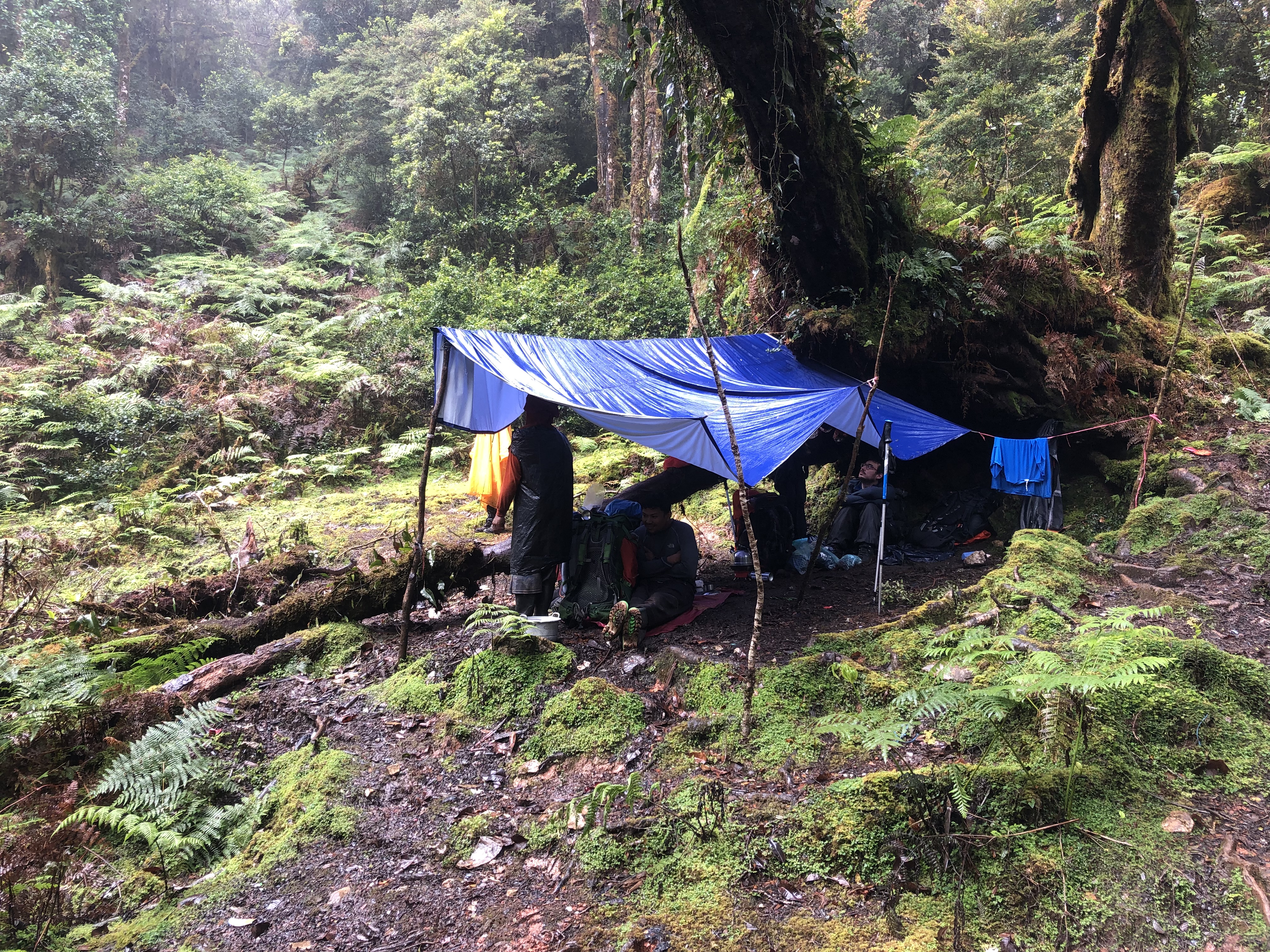
Whichever route you use, this is a serious undertaking and heavy rains are common all year round. It is also customary to have a traditional good luck ceremony in the village prior to starting the trek.
The Southern Route:
The route from the south starts at Piliana (approx 430 metres above sea level) and hikers usually spend a night in Piliana village and have a good luck ceremony either the evening before or at breakfast.
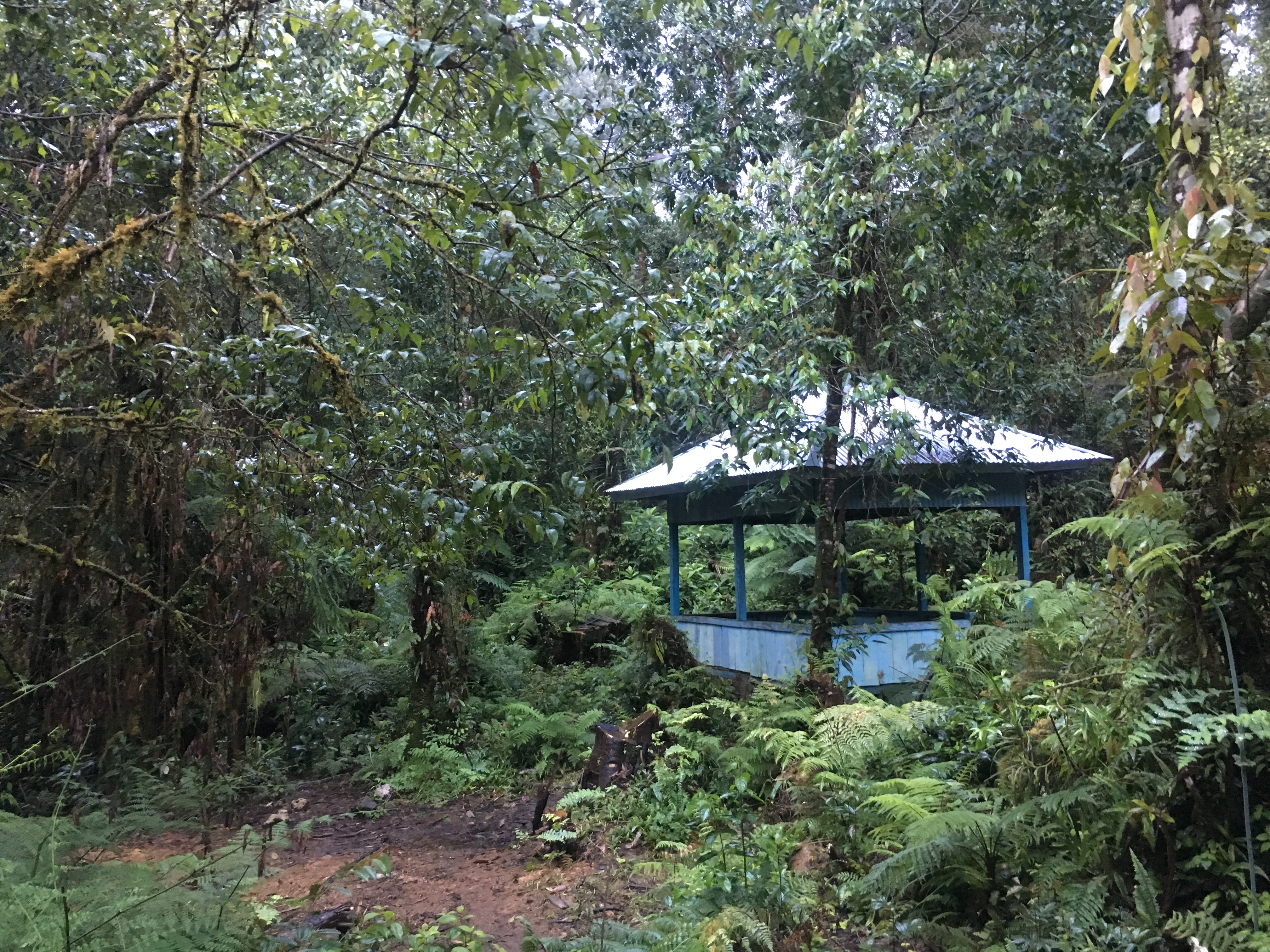
Hike Day One: The trail leads through plantations and across several rivers before reaching Pos 1 Yamitala (524m) after around 2-3 hours. Pos 1 is a pleasant spot just beyond a waterfall and has a hut for shelter. It is then a further 3-4 hours, initially with some ups and downs, to Pos 2 Aimoto (1,160m). There are three huts and a water source.
Hike Day Two: The trail continues to Pos 3 Highcamp (1,920m, 4-5 hours). From Pos 3 onwards, water is collected in plastic sheets in the ground as there are no more streams and the terrain begins to increase in difficulty. Pos 4 Isiali (2,150m) is next after 2-3 hours and there are two huts for shelter.
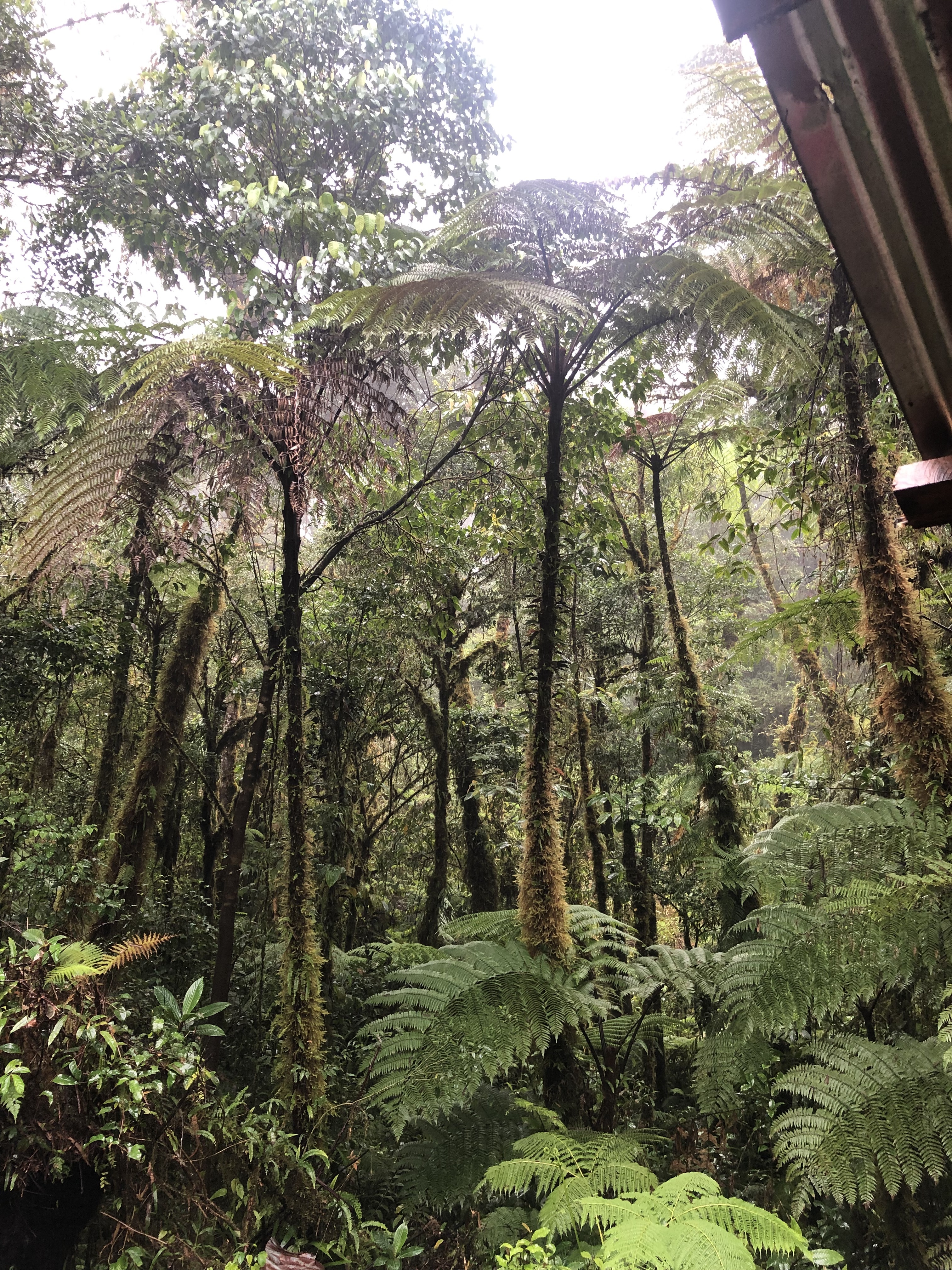
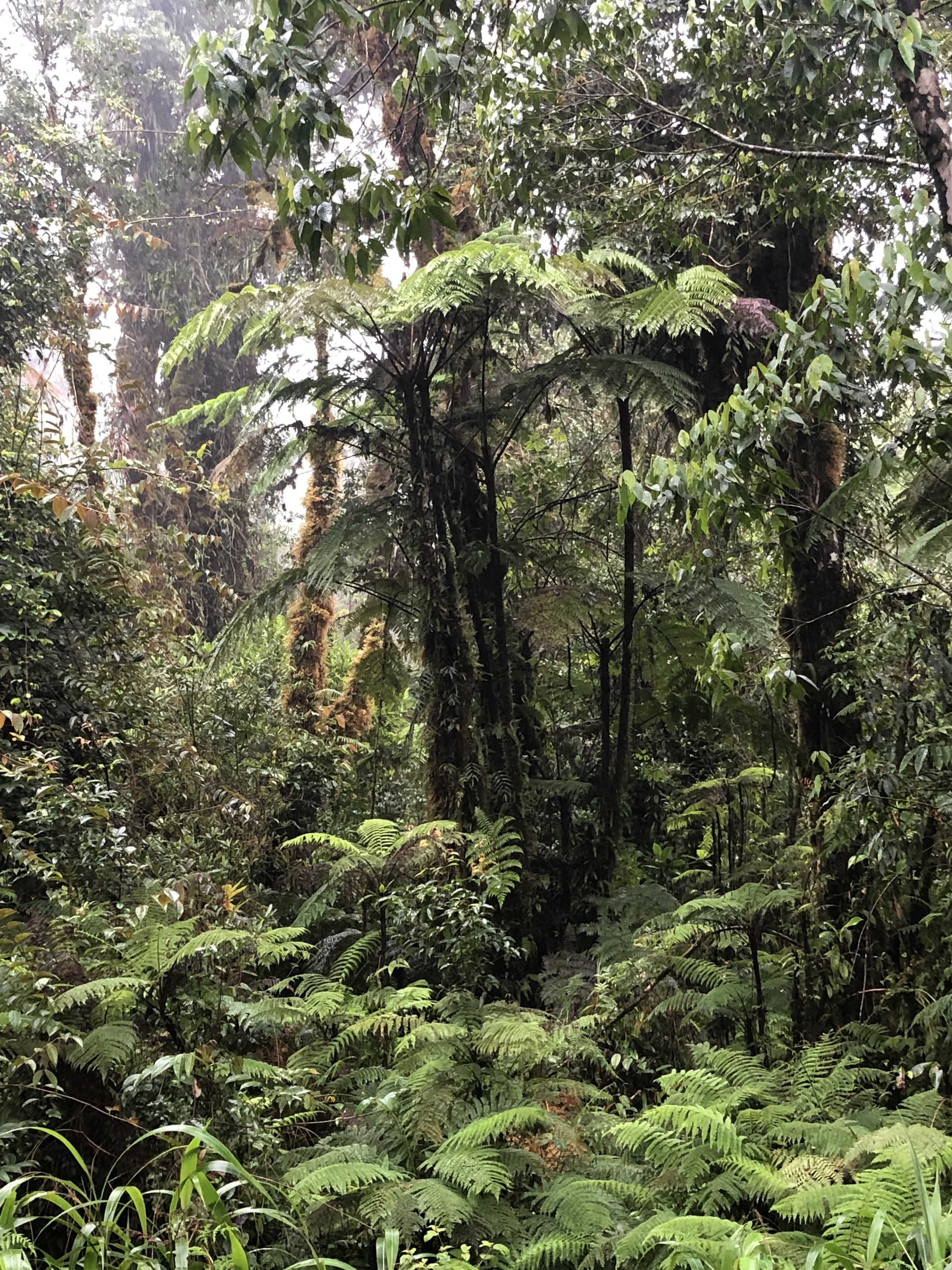
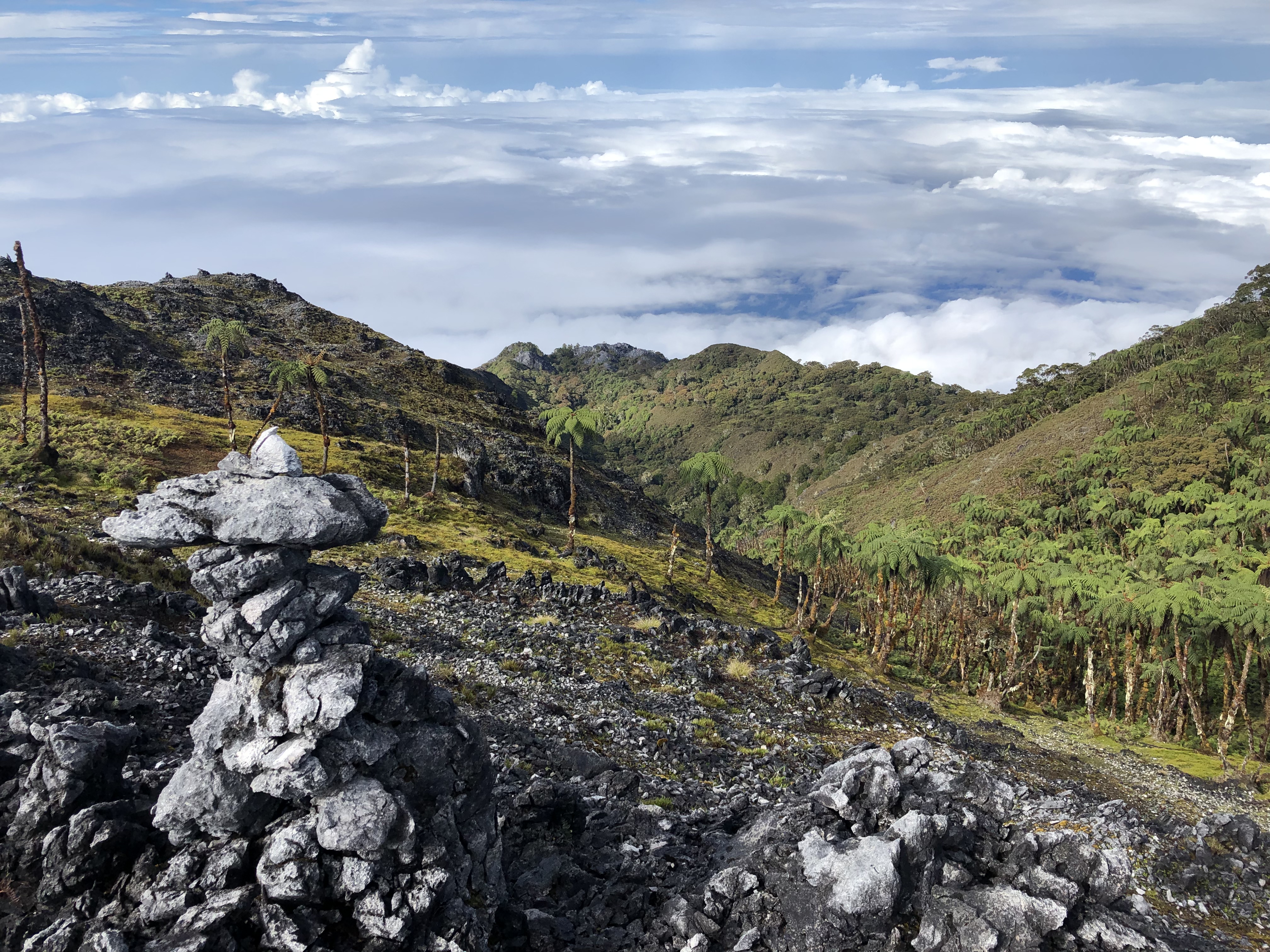
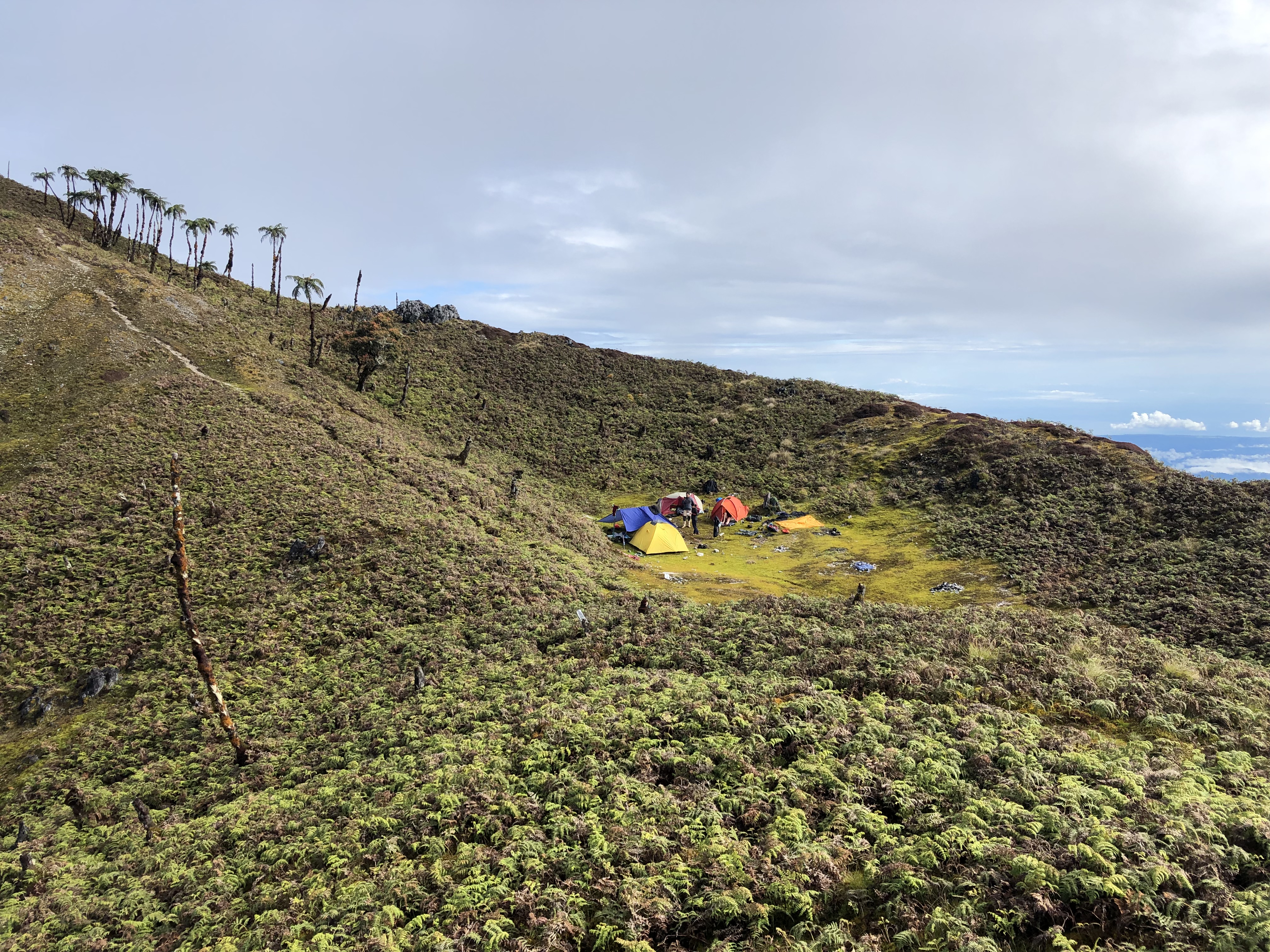
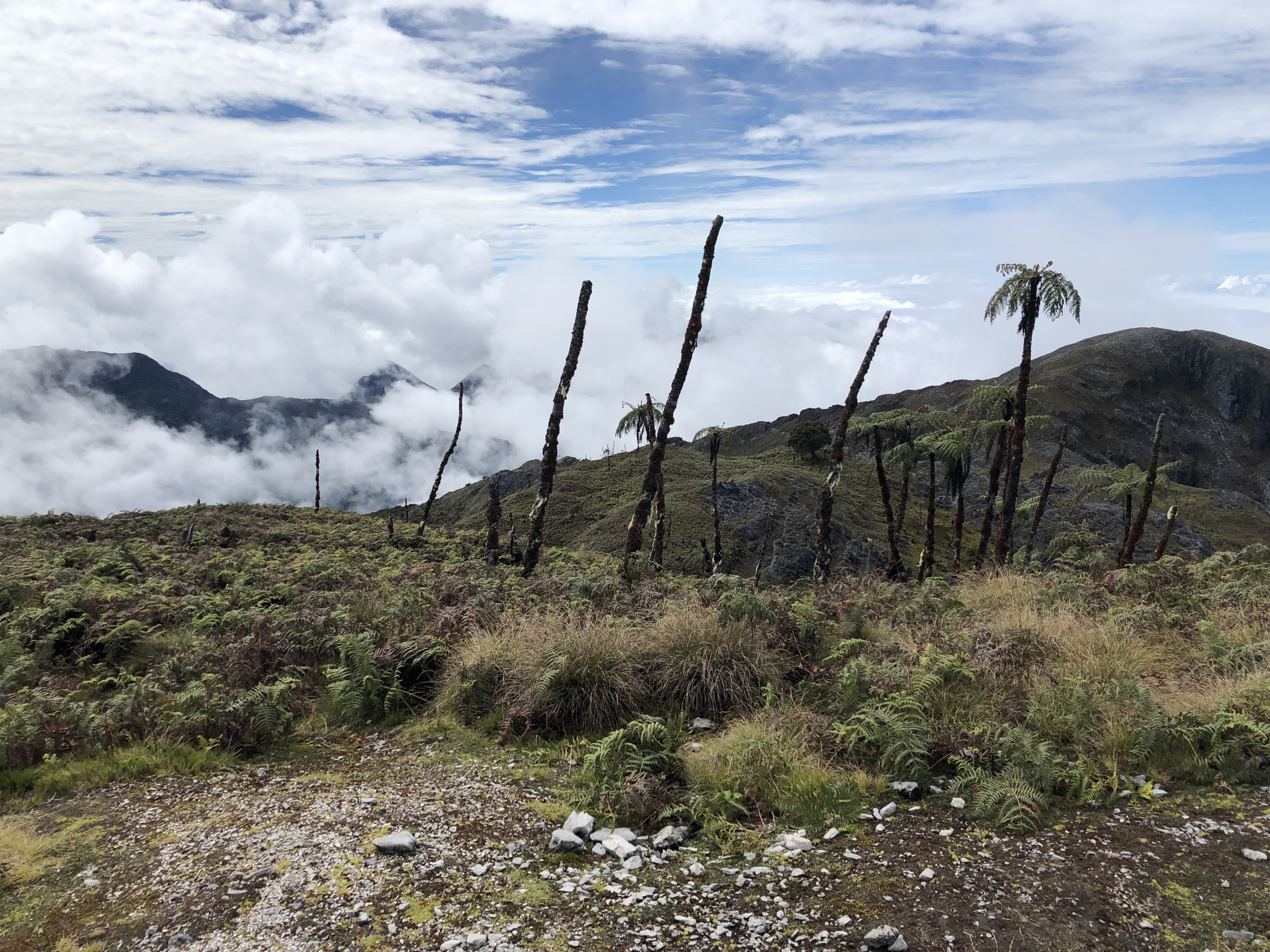
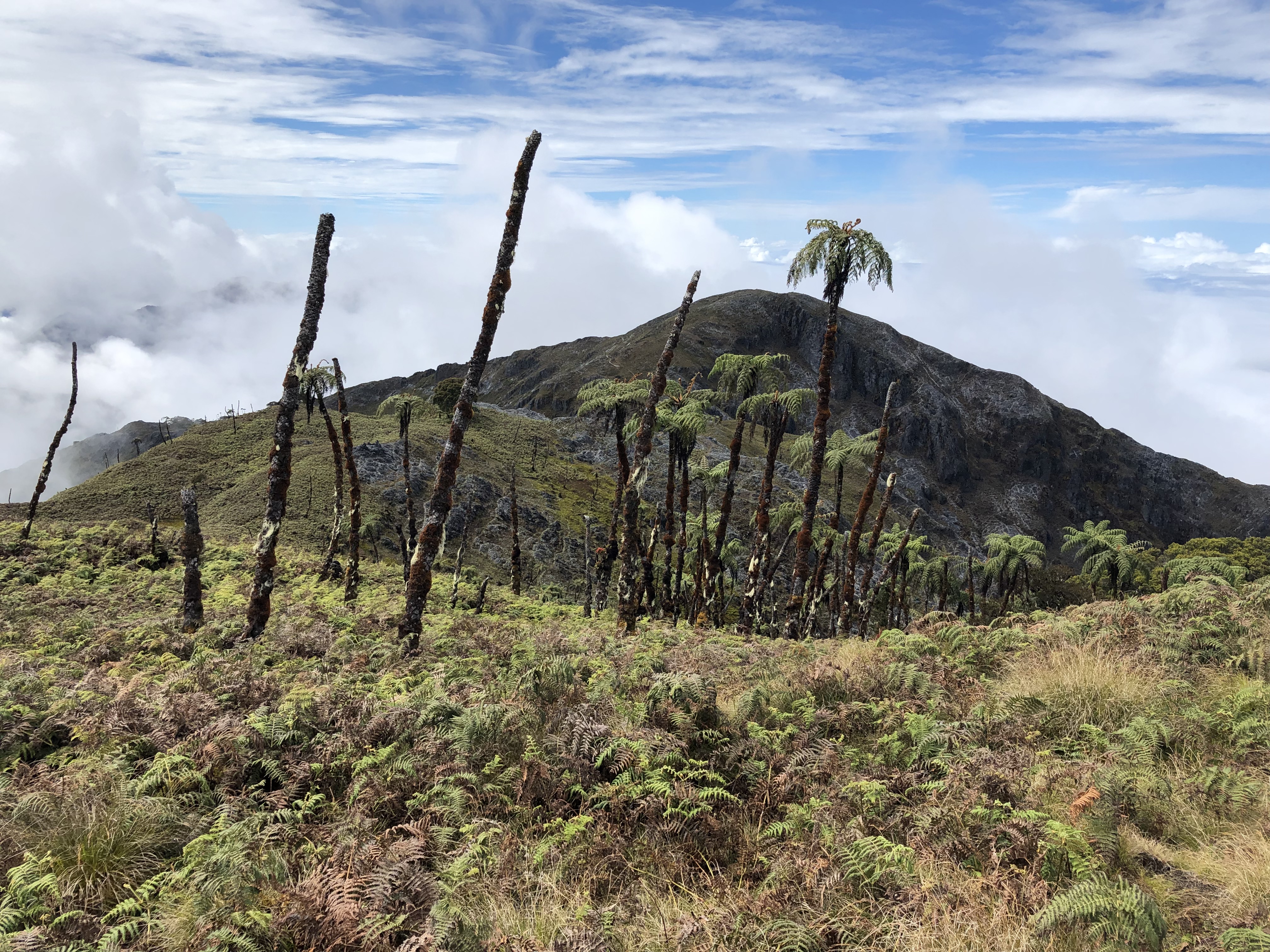
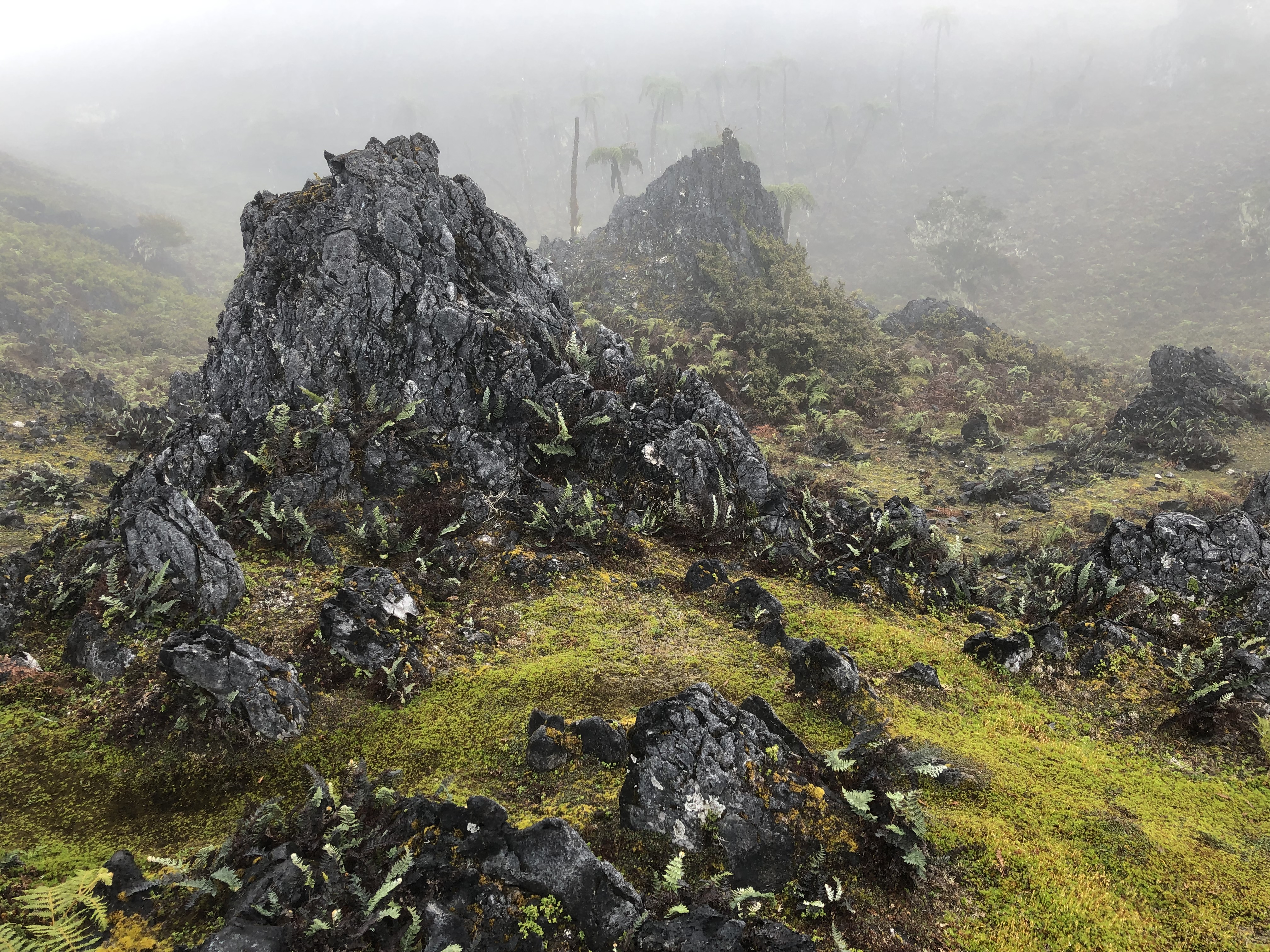
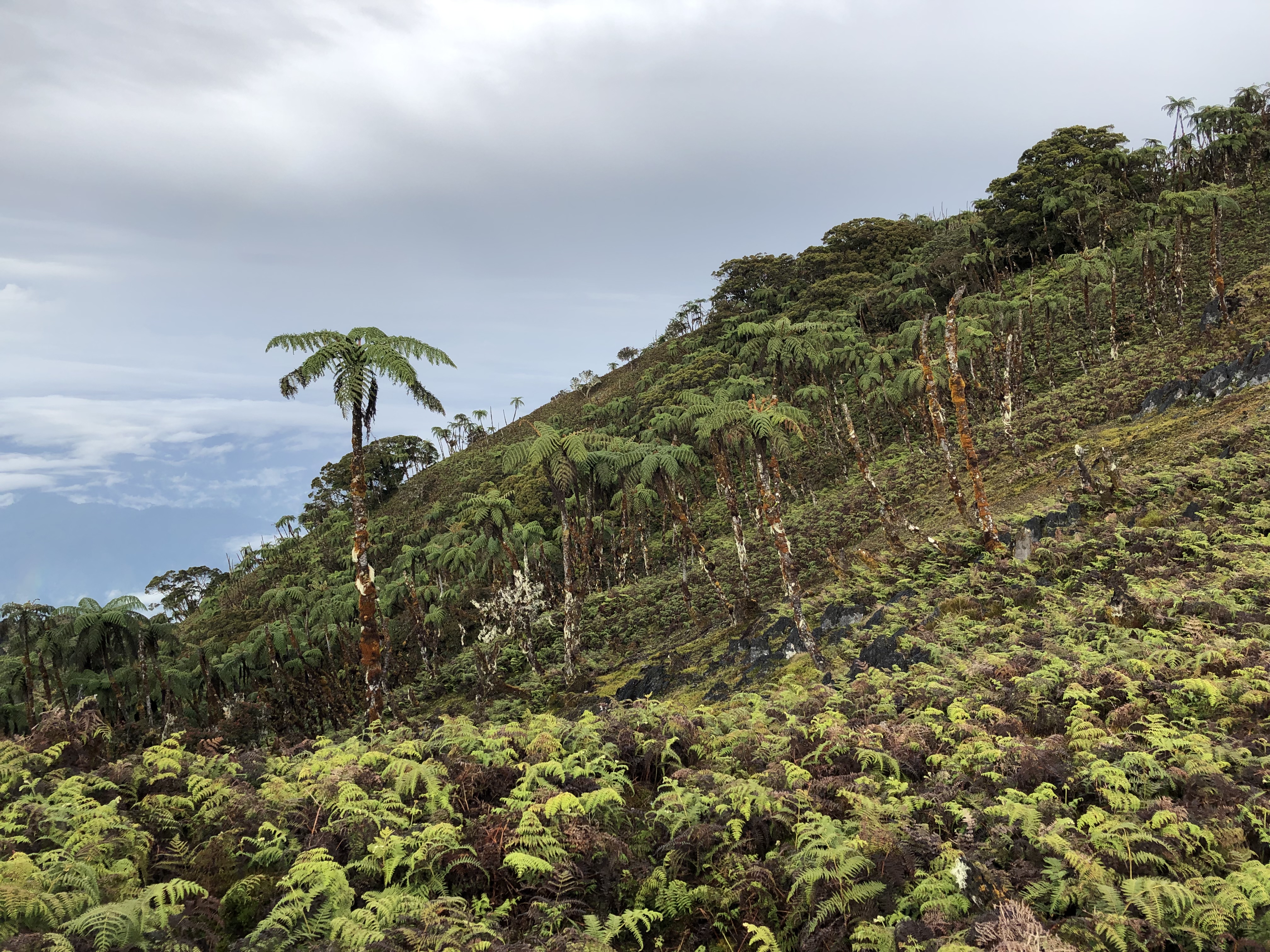
Hike Day Three: Puncak Bintang (2,640m) is next before the trail descends to Pos 5 Nasapeha Camp (2,580m) which is about 3-4 hours from Isiali but has no shelters at present (2019). After further ups and downs, Pos 6 Waifuku (2,970m) is reached. This is a unique landscape of palms or ferns and rock features and is just a short distance below the peak that most hikers intend to reach with the Binaiya summit signs and excellent views in clear weather. There is a pond nearby which can be used as a water source (best boiled first, used with iodine tablets, or mixed with ginger as the locals suggest). If the weather is good before dark then this is the time to take photos from the summit above, otherwise wait until the follow morning at first light.
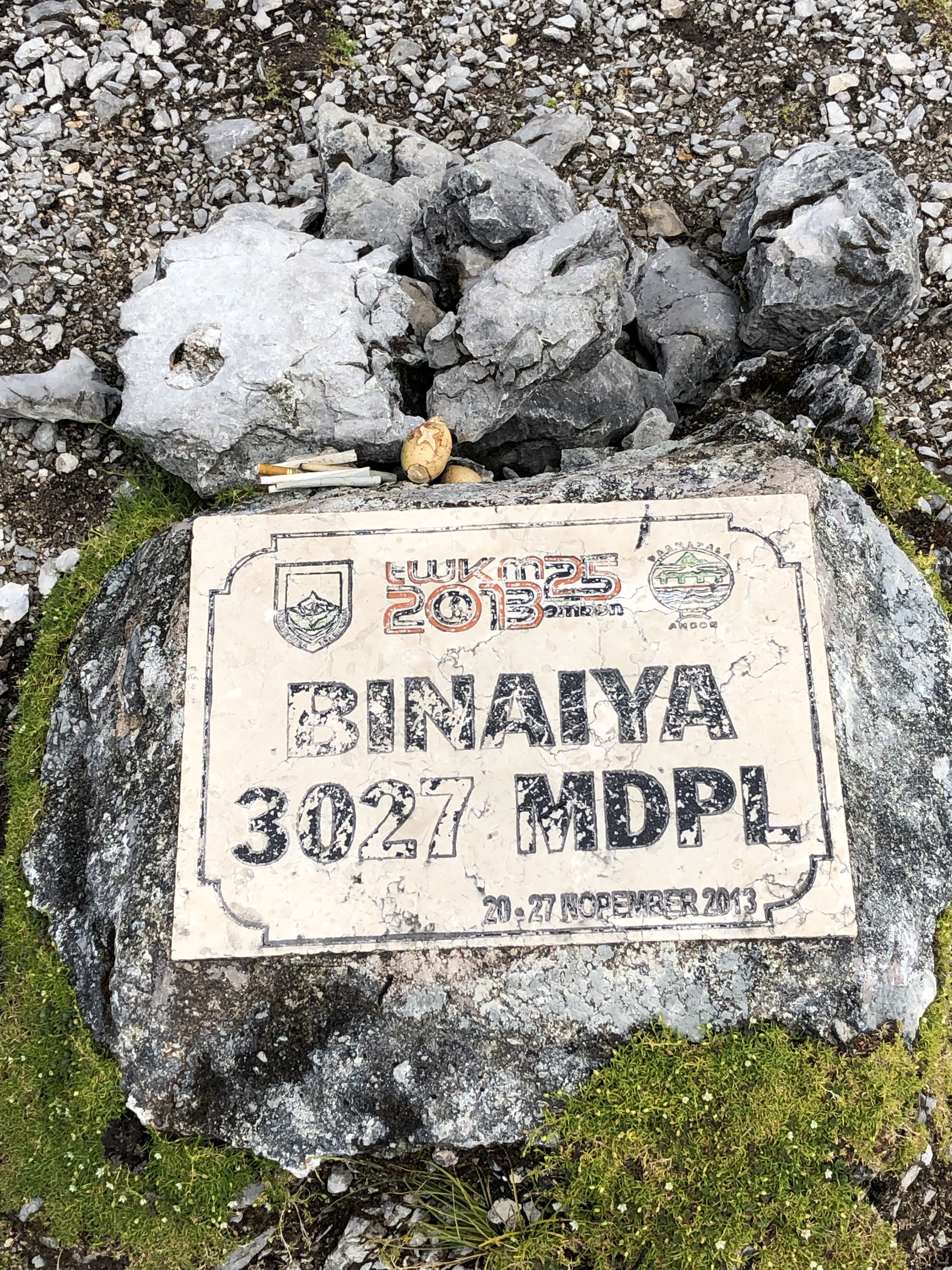
Hike Day Four: If the weather is clear, the fourth day of hiking should start with sunrise at the top of Puncak Waifuku, which is the peak with all the Binaiya signs on and is the primary target of almost all hikers who come here. GPS readings here vary from 2,997m to 3,020m. It is a wonderful viewpoint, but those who are adamant about reaching the true summit of the Binaiya range and the true highest point of Seram island will see a peak of a very similar height (estimated 20-30m higher than Puncak Waifuku / Binaiya signs peak) nearly 2 kilometres to the north-west.
This true summit is called Gunung or Puncak Siale. Even though Binaiya is one of the ‘Seven Summits of Indonesia’, the true summit peak is usually off-limits to hikers due to National Park conservation regulations. Therefore, very very few of those who claim to have climbed to the top of Binaiya have actually been to the highest peak.
It sounds as if it it takes around 3 hours (each way) from the second-highest peak with all the summit signs and apparently has challenging terrain. Anyone thinking of attempting it is advised to schedule a second night camping at Pos 6 and therefore need a total of 6 hiking days instead of 5. It is hoped that the National Park regulation will be changed soon to encourage responsible access to this mysterious true peak.
At the moment, some sites suggest that the true Siale peak is 3,035m and the normal sign peak known simply as Binaiya or Puncak Waifuku is 3,027m, although based on GPS and SRTM we thing it is likely that Siale is between 3,027m and 3,035m and Binaiya signs peak is between 2,997m and 3,020m.
Assuming you are not spending the best part of a day trying to bag the true peak, this will typically be the first day of two descent days. You can either descend only as far as Pos 4 Isiali and have a few hours of rest time and then proper sleep in a shelter before a 12 hour trek on the final day, or else try to reach Pos 3 Highcamp, hope it doesn’t rain, and have a slightly less extreme final day!
Hike Day Five: Arrive back in Piliana from wherever you started, possibly in the dark, and definitely after several river crossings!
The Northern Route:
Should the situation improve along the northern route, it is as follows: Huahulu Halte (140m) – Huahulu Village (126m) – 3 hours to Roho Village (82m) – 7 hours to Kanikeh (595m) via Wasamata River (375m) – 6 hours to Waihuhu (1,298m) via Wayamsela River (812m) – then on up to meet the southern trail at Waifuku and Biniaya summit ridge.
Bagging information by Mathis Joffrain, edited by Dan Quinn (October 2019)
Trip Report by Mathis Joffrain (August 2019)
Day 1 (Ambon – Piliana)
We started the day by taking a speedboat from Tulehu port in Ambonaround 9h-9h30. As soon as we settled down inside, we were swamped by local merchants selling all kinds of food like pisang goreng, tahu goreng, pop mie… Also not forgetting a sinetron showing on the TV to entertain the passengers throughout the ride. Definitely not part of the adventure yet, but it is definitely Indonesia. The sea was calm at the beginning but became quite wavy for the last 30 minutes and we were just glad to finally reach Amahai Port in Masohi, Seram island slightly after 11h.
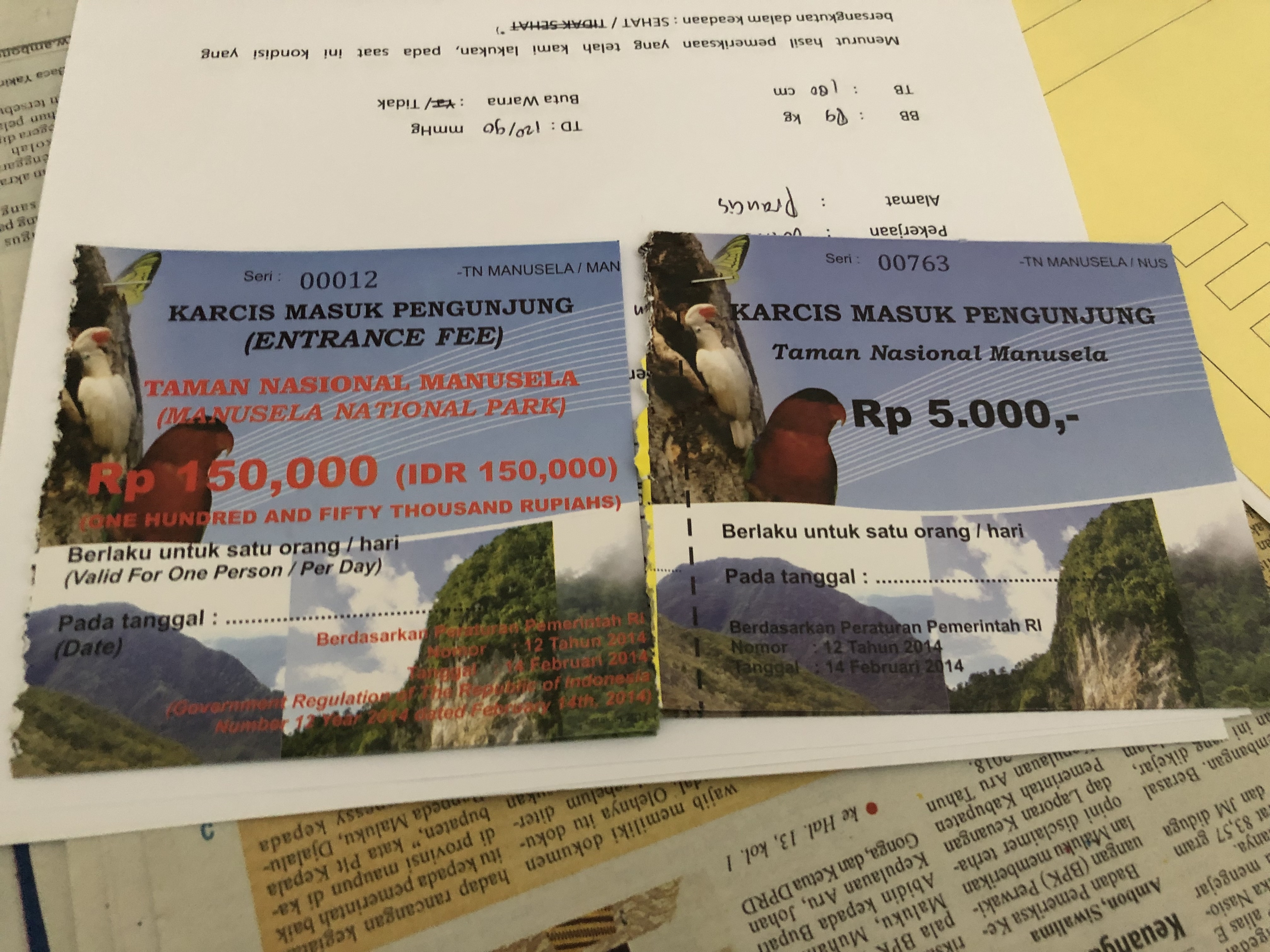
We headed directly to Taman Nasional Manusela office, which is 15 minutes drive away from the port, to arrange for the trekking permits (simaksi). Note that the price for foreigners is 30x more than that for local trekker (Rp 150,000 vs Rp 5,000 per day per trekker). It definitely took a toll on our wallet, especially when it is going to be a 7-day trek since the plan is to traverse South to North route and summiting the rarely visited true peak (Puncak Siale). Additionally, we also had to furnish Surat Kesehatan from the Apotek that confirmed that we are in good shape for the trek.
To our dismay, we learnt that we would not be able to descend via the North route due to the conflict between the officials (Police and National Park) and local villagers in Desa Kanikeh and Desa Roho. Apparently, some folks were imprisoned due to illegal bird hunting, resulting in the unhappiness of the villagers towards the officials. This was bad news to us as descending via North Route is said to be much nicer than going back from South. On the hindside, we were really impressed by the Indo government’s devotion to protect the endangered forest birds.
Anyway, after vain discussions with the National park officials to eventually agree to adhere the instructions to not descend via the North route and making an impressive number of photocopies (8 exactly), we left for Desa Piliana around 17h. We reached the Desa at 20h (since we had to hand over the photocopies of the permits to various police offices along the way), which is at an altitude of 430m. The last 30 minutes ride towards the village had to be done with a 4×4 as it is steep and rocky. Note that the road along the sea offers an enjoyable introduction to the charming island of Seram. We stay overnight at the house of the village chief (Bapak Raja).
Day 2 (Piliana – Pos 1 Yamitala – Pos 2 Aimoto)
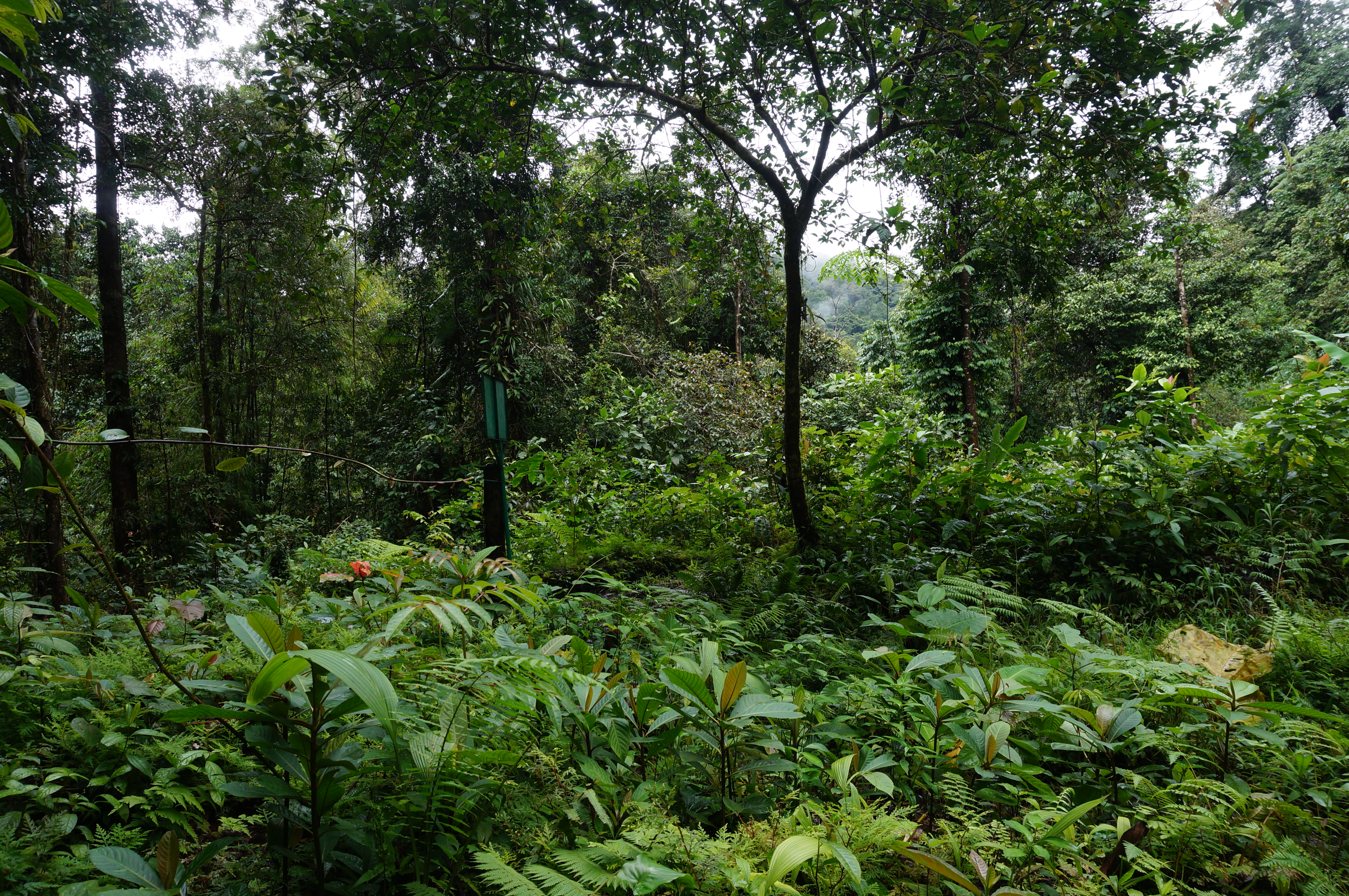
We woke up at 8h with a heavy rain outside (our constant companion during the trek). After a pleasant breakfast and a blessing ceremony by Bapak Adat (perhaps not to eat the sirih if you don’t like the taste), we embarked at 10h. Shortly after, we found ourselves in the midst of plantations, with some up and downs and river crossings, not forgetting the muddy tracks throughout. We arrived at Pos 1 (Sungai Yamitala, Elevation=500m) at 12h30. There was a nice little waterfall just before Pos 1 where we enjoyed bath and free back massage. The hut at Pos 1 has gorgeous environment with many birds, butterflies, exotic plants and bats. It was difficult to leave such a pleasant place hence we only started our journey again at 14h30. The first 1.5 hours was a hassle with difficult terrains of upslope and downslope, but the amazing surrounding forests is a respite, especially near the rock formations. We arrived at Pos 2 at 17h45, elevation of 1,200m, whereby we can find three huts and small stream running downwards nearby. Even though the rain did not stop for even a minute during the day and the coming night, the temperature was very pleasant (not too cold) and the huts allowed us to stay dry.
Day 3 (Pos 2 Aimoto – Pos 3 Highcamp – Pos 4 Isiali)
We left Pos 2 at 10am, and arrived at Pos 3 at 14h30. The progression was slow due the continuous rain, and the muddy condition of the trail, while not being too difficult. We could only start again at 16h as we waited for water to fill up the kubangan for our usage for the following days (no streams nearby hence the water is collected in a kubangan). From this point onwards, the trail turns to ridges crossings and increases in difficulty. We reached Pos 4 Isiali at 18h15, and were pleasantly surprised to find a quite comfortable campsite with two huts, and water recuperation systems (the kubangan) right in the middle of the forest. The elevation here is 2,140m and temperature was still nice.
Day 4 (Pos 4 Isiali – Pos 5 Nasapeha – Pos 6 Waifuku)
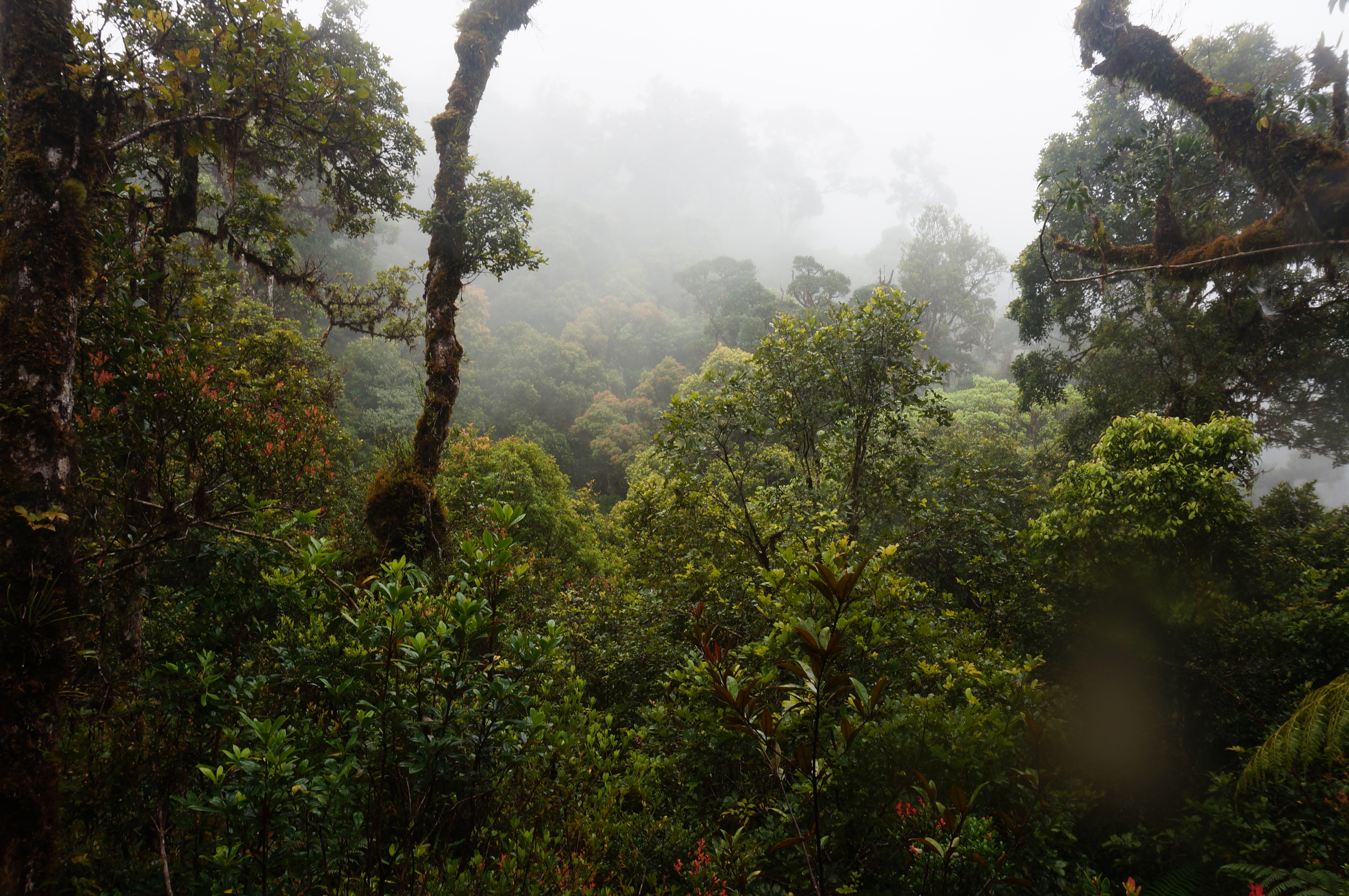
For the first time in 48h, the rain calmed down. We took time to enjoy the nature, observe birds and explore the forest near the camp. At around 10h, we started the day with climbing up steep slopes, and down a little bit, and after some ridges above tropical forest, we arrived at the so-called Puncak Bintang at 2,640m, then descending to Nasapeha to have lunch around 13h30. Rain started to pour again and we had to gobble our lunch since there was no efficient shelter at this place. Soon enough, we found ourselves packing our bags and continued on with going through the multiple upward and downward slopes, before we finally reached Pos 6 Waifuku at an altitude of 2,970m.
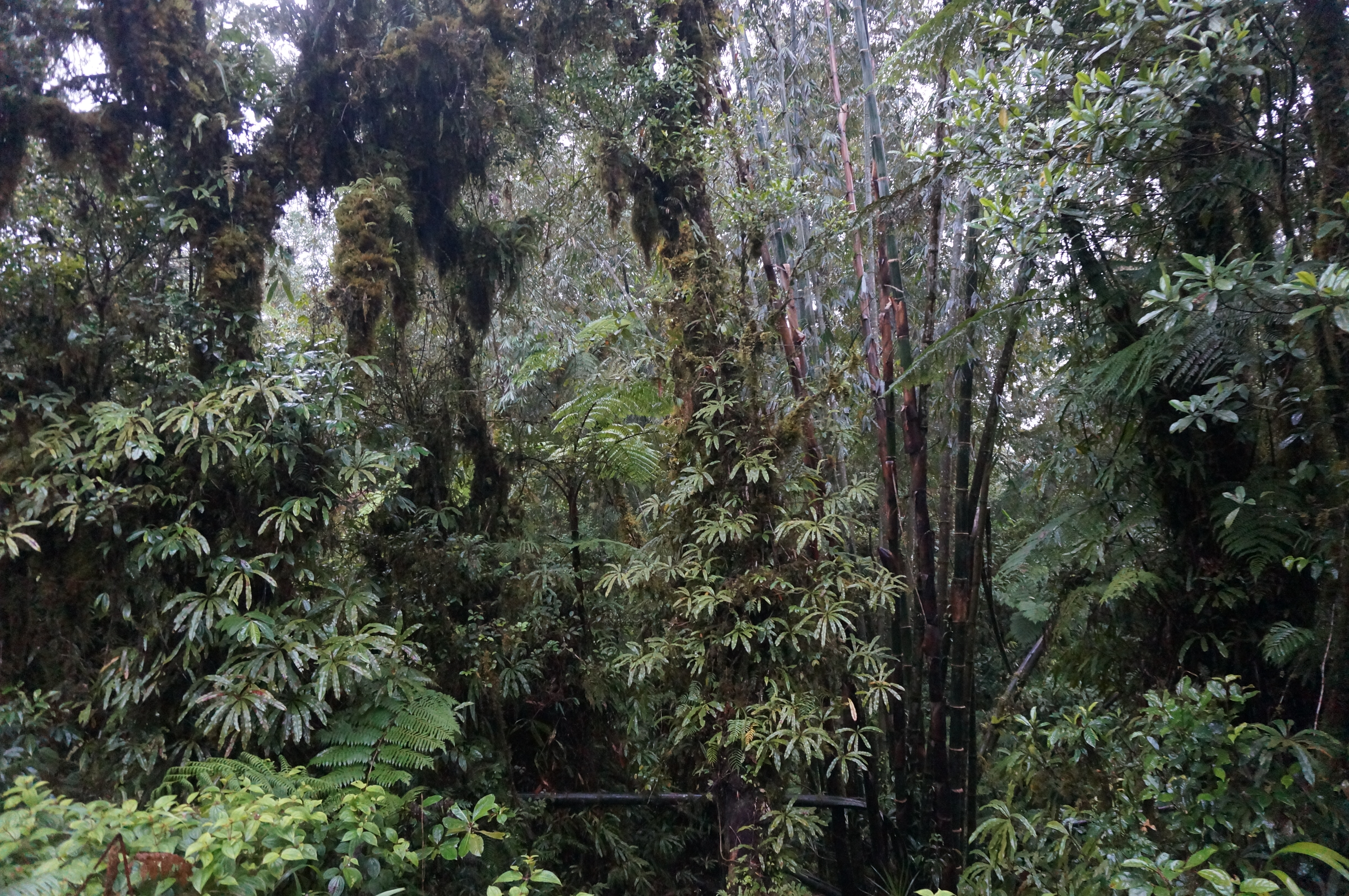
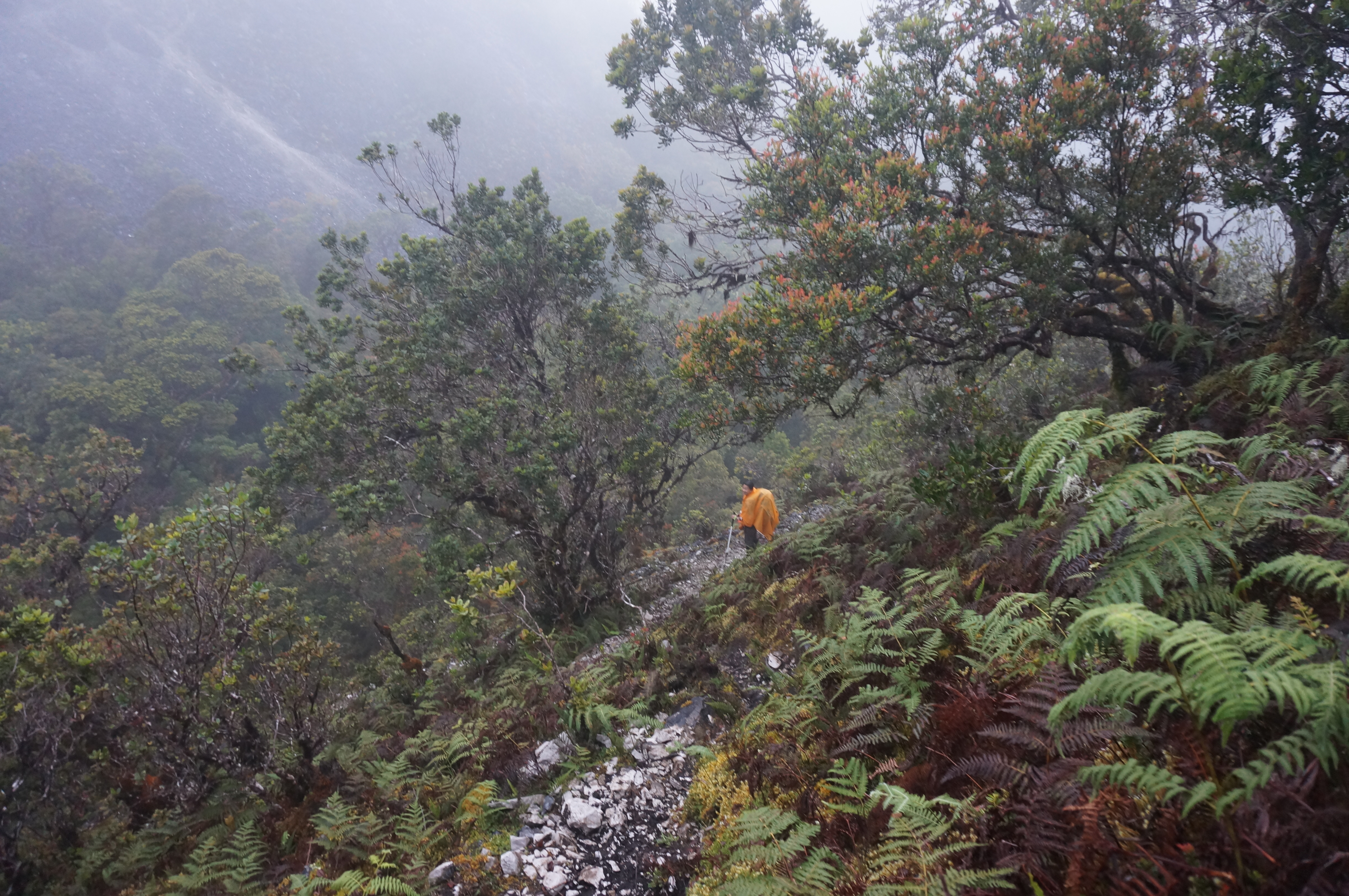
It was really not a walk in the park because the path from Pos 1 to Pos 6 is not a straightforward uphill. Instead, we had to go through multiple upward and downward slopes, often times slippery with loose rocks by the ridges at higher elevation. Hence we were very glad to finally reach Waifuku campsite after all the hard work. Despite the rain and fog, the place is stunning with nicely strange palms and black rocks. I had never seen this kind of landscape before. Being so near to the Waifuku summit (which is only 10 minutes above us), this place is conveniently protected from wind. It feels a bit unreal as contrary to other volcanoes summits where the place is narrow, it gives here an impression of great space to be explored. Another good point is that the water from the nearby water body / pond is potable. But we are still advised to mix it with ginger though.
Day 5 (Pos 6 Waifuku – Puncak Waifuku – Puncak Siale – Pos 6 Waifuku)
Today, we saw sun for the first time while waking up and took some time to enjoy its presence and to dry our clothes (we were perpetually in wet clothes and ponchos for the whole trek, and only changed to dry clothes to sleep). We went to Puncak Waifuku at 10h20. I dedicated the summit to REASK’s people with whom I spent memorable days in Sydney. These guys are now at the top, in a non figurative way. The altitude is 3,020 m, and the views are just stunning. We then continued the trail to the other peak called Puncak Siale. I am still stunned by the beautiful landscapes and plants, as well as the mushy trees as we went down the forest. We saw some deers and beautiful birds along the way. With the rain coming back, we started ascending and continued on a succession of rock ridges going upwards. The wind and rain got stronger as we progressed on the rock ridges. At this point, we went beyond safe conditions but we pushed on and finally summited Siale at 13h13 with an altitude indication of 3,030m. It is very possible that we were at the real top of Moluccas and we were certainly higher than Binaiya summit. It is a very beautiful summit with a prairie just next to it that makes the whole atmosphere very serene. However, the weather was not on our side (i.e. heavy rain and strong wind) that we had to turn back quickly due to fatigue and cold. I can illustrate that fact with a French quote from the tallest member of our team. « Si on ne descend pas tout de suite, vous pourrez toujours revenir me voir tous les ans à la Toussaint ». So we did go down thereafter to Waifuku campsite to spend the night. The journey back is also not an easy one as we had to repeat the going upslope and downslope terrain in the rain.
Day 6 (Pos 6 Waifuku – Pos 4 Isiali)
The plan for the day is to descend to Pos 4 isiali before heading back to Piliana the following day. We chose Pos 4 because Pos 3 Highcamp is too humid for camping and it would be too long a walk to go directly to Pos 2 Aimoto). As the journey would not take that long, we spent some more time exploring the summit region which leave me an unforgettable sensation. When we finally descended at reach Nasapeha at 12h, we did not manage to rest for long due to the limited shelter and heavy rain. As such, we pushed on and reached Pos 4 Isiali at 14h30.Weather was still bad and tiredness started to show in the team. However, the comfortable camp and the short day means we had time to rest and store energy for the longest coming day.
Day 7 (Pos 4 Isiali – Basecamp Piliana)
This would be the longest day of our trek and we started walking at 7h45. The breakfast of spaghetti bolognaise and coco crunch was a clear signal by our guide that indeed it would be a very long journey back. We reached Puncak Manukupa (between Pos 4 and Pos 3) at 11h. Seeing our fatigue, our porters entertained us by teaching us how to capture big pythons. Essentially, the most critical phase consists of putting the head of the beast inside a bag.
We reached Pos 2 at 13h30, and Pos 1 at 17h. We had probably underestimated this part. Though the dusk had started to set, we continued to push on to reach Piliana. Finally, we arrived at Bapak Raja’s house around 20h and finished the trek in the dark with multiple crossing of rivers with headlamps. Many weeks after this trip, we all still miss the atmosphere of this forest.
Trail Map
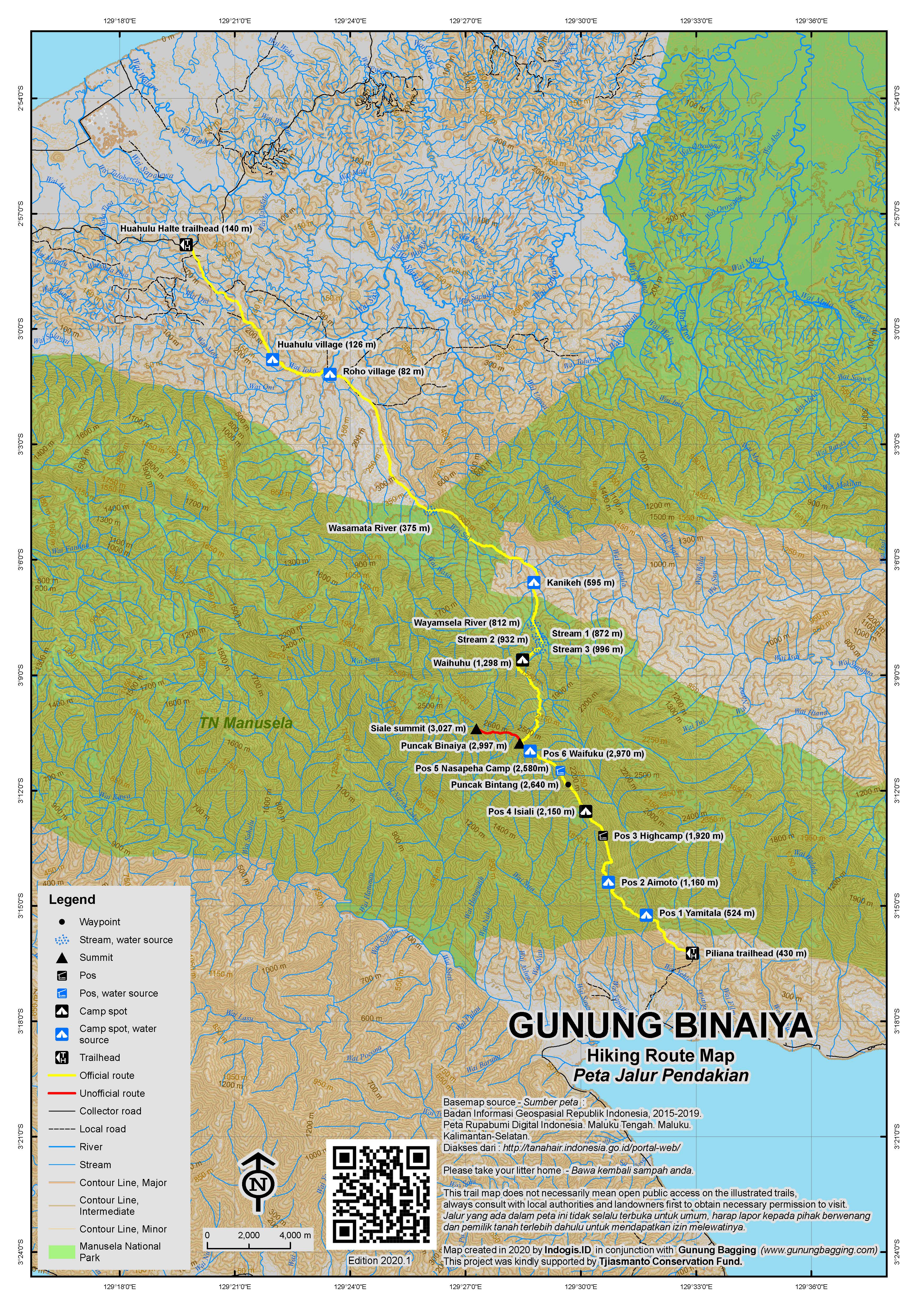
For a high quality PDF version of this and other trail maps, please download from our Trail Maps page.
Practicalities
- Getting there: A considerable journey from Ambon. First take a speedboat from Tulehu harbour to Amahai, Masohi, Seram (90min – 2 hours). The National Park office is 15min away by road.
- Guides and GPS Tracks: Want a PDF version for your phone? Looking for a guide? Need GPS tracks and waypoints? Gunung Binaiya information pack can be downloaded here.
- Trip planning assistance: Would you like Gunung Bagging to personally help you in arranging your whole trip? Please contact us here.
- Permits: Lots of time-consuming and quite unnecessary admin, as is still sadly usual in National Parks in Indonesia. Get a hiking permit from Manusela National Park Office in Masohi town or try to arrange in advance via email to balaitnmanusela@gmail.com Currently (2019) Indonesians pay Rp5,000 PER DAY and non-Indonesians must pay Rp150,000 PER DAY even if they live, work and pay tax locally. This is 30 times the local rate which many may find unacceptably discriminatory. It also remains a grey area as to whether or not you can hike to the true highest peak. Photo fee of Rp250,000 per group. Indonesian health certificates also required for each member of the group.
- Water sources: Available from streams on the lower slopes and holes in the ground near most of the camp spots higher up. Ask your guides for the latest on best sources of drinking water near camps and be sure to take iodine tablets or similar.
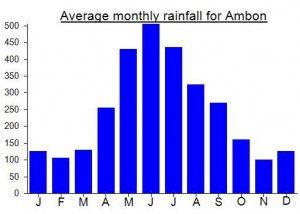
Local Average Monthly Rainfall (mm):
Location
Click on the blue arrow  (top right) to see your current location on the map
See Petter’s reports of another successful hike to the true peak of Binaiya and not just the one that 99% of hikers visit and mistakenly think is the highest point….
http://www.ii.uib.no/~petter/mountains/3000mtn/binaiya-east.html
http://www.ii.uib.no/~petter/mountains/3000mtn/binaiya-west.html
Has the National Park seen sense and relaxed the rules now? Hopefully…
Apparently Binaiya is now open again, after a long period of closure due to Covid. Good news!
Here’s a fairly new video made by some local hikers including about Puncak Siale (seen at 8:53) – the true highest peak of Seram.
https://www.youtube.com/watch?v=toQ9GBPKHSw
Let’s hope this spot becomes the new target of hikers to Binaiya, as it looks really quite beautiful.
I made the trip in early November 2019. The officials said that it’s possible to take Piliana-Huahulu route or vice versa. We take Piliana route and did it in 4 days and 3 nights. The track is one of the hardest i have encountered. We’ve got a quite clear weather along the way and especially make the trip to ‘puncak’ really enjoyable. You can get water until Pos 2 (Aimoto). The officials said that it’s not possible to reach ‘puncak sejati’ but someone i meet on the way, who claim had reach the true peak, said that you need 2 hours to get there from official peak and 2 hours back. The route via Piliana: Negeri Piliana-Sungai Yahe Atas-Camp Yahmitala-Puncak Lukuamono-Liang-Camp Aimoto-Aiulanusalai-Teleuna-Highcamp-Manukupa Peak-Camp Isilali-Puncak Bintang-Camp Wayfuku-Puncak Binaya.
Porters are assigned by Bapak Raja (chief village), but you can request a specific person if you want. A national park officer recommended Bang Kancil. I don’t request him, but still get a strong porter.
And try Kolam Ninifala to refresh your tired body after get back to Desa Piliana.
hello, I didn’t bring a tent with me, it is possible to rent in seram or I have to rent in Ambon where I am now? can you give me an idea about the costs
thanks so much
Federico
You can rent the tent at Ambon. The cost is about around 35.000-50.000/day. not only that, if you want rent back pack, stove, matress or anything for climbing, you can get the rental at Ambon. maybe you can contact +6281221689730 (Bayu). He has gear store in Ambon.
Report Binaiya Trip –August 2019
Day 1 (Ambon – Piliana)
We started the day by taking a speedboat from Tulehu port in Ambonaround 9h-9h30. As soon as we settled down inside, we were swamped by local merchants selling all kinds of food like pisang goreng, tahu goreng, pop mie… Also not forgetting a sinetron showing on the TV to entertain the passengers throughout the ride. Definitely not part of the adventure yet, but it is definitely Indonesia. The sea was calm at the beginning but became quite wavy for the last 30 minutes and we were just glad to finally reach Amahai Port in Masohi, Seram island slightly after 11h.
We headed directly to Taman Nasional Manusela office, which is 15 minutes drive away from the port, to arrange for the trekking permits (simaksi). Note that the price for foreigners is 30x more than that for local trekker (Rp 150,000 vs Rp 5,000 per day per trekker). It definitely took a toll on our wallet, especially when it is going to be a 7-day trek since the plan is to traverse South to North route and summiting the rarely visited true peak (Puncak Siale). Additionally, we also had to furnish Surat Kesehatan from the Apotek that confirmed that we are in good shape for the trek.
To our dismay, we learnt that we would not be able to descend via the North route due to the conflict between the officials (Police and National Park) and local villagers in Desa Kanikeh and Desa Roho. Apparently, some folks were imprisoned due to illegal bird hunting, resulting in the unhappiness of the villagers towards the officials. This was bad news to us as descending via North Route is said to be much nicer than going back from South. On the hindside, we were really impressed by the Indo government’s devotion to protect the endangered forest birds.
Anyway, after vain discussions with the National park officials to eventually agree to adhere the instructions to not descend via the North route and making an impressive number of photocopies (8 exactly), we left for Desa Piliana around 17h. We reached the Desa at 20h (since we had to hand over the photocopies of the permits to various police offices along the way), which is at an altitude of 430m. The last 30 minutes ride towards the village had to be done with a 4×4 as it is steep and rocky. Note that the road along the sea offers an enjoyable introduction to the charming island of Seram. We stay overnight at the house of the village chief (Bapak Raja).
Day 2 (Piliana – Pos 1 Yamitala – Pos 2 Aimoto)
We woke up at 8h with a heavy rain outside (our constant companion during the trek). After a pleasant breakfast and a blessing ceremony by Bapak Adat (perhaps not to eat the sirih if you don’t like the taste), we embarked at 10h. Shortly after, we found ourselves in the midst of plantations, with some up and downs and river crossings, not forgetting the muddy tracks throughout. We arrived at Pos 1 (Sungai Yamitala, Elevation=500m) at 12h30. There was a nice little waterfall just before Pos 1 where we enjoyed bath and free back massage. The hut at Pos 1 has gorgeous environment with many birds, butterflies, exotic plants and bats. It was difficult to leave such a pleasant place hence we only started our journey again at 14h30. The first 1.5 hours was a hassle with difficult terrains of upslope and downslope, but the amazing surrounding forests is a respite, especially near the rock formations. We arrived at Pos 2 at 17h45, elevation of 1,200m, whereby we can find three huts and small stream running downwards nearby. Even though the rain did not stop for even a minute during the day and the coming night, the temperature was very pleasant (not too cold) and the huts allowed us to stay dry.
Day 3 (Pos 2 Aimoto – Pos 3 Highcamp – Pos 4 Isiali)
We left Pos 2 at 10am, and arrived at Pos 3 at 14h30. The progression was slow due the continuous rain, and the muddy condition of the trail, while not being too difficult. We could only start again at 16h as we waited for water to fill up the kubangan for our usage for the following days (no streams nearby hence the water is collected in a kubangan). From this point onwards, the trail turns to ridges crossings and increases in difficulty. We reached Pos 4 Isiali at 18h15, and were pleasantly surprised to find a quite comfortable campsite with two huts, and water recuperation systems (the kubangan) right in the middle of the forest. The elevation here is 2,140m and temperature was still nice.
Day 4 (Pos 4 Isiali – Pos 5 Nasapeha – Pos 6 Waifuku)
For the first time in 48h, the rain calmed down. We took time to enjoy the nature, observe birds and explore the forest near the camp. At around 10h, we started the day with climbing up steep slopes, and down a little bit, and after some ridges above tropical forest, we arrived at the so-called Puncak Bintang at 2,640m, then descending to Nasapeha to have lunch around 13h30. Rain started to pour again and we had to gobble our lunch since there was no efficient shelter at this place. Soon enough, we found ourselves packing our bags and continued on with going through the multiple upward and downward slopes, before we finally reached Pos 6 Waifuku at an altitude of 2,970m.
It was really not a walk in the park because the path from Pos 1 to Pos 6 is not a straightforward uphill. Instead, we had to go through multiple upward and downward slopes, often times slippery with loose rocks by the ridges at higher elevation. Hence we were very glad to finally reach Waifuku campsite after all the hard work. Despite the rain and fog, the place is stunning with nicely strange palms and black rocks. I had never seen this kind of landscape before. Being so near to the Waifuku summit (which is only 10 minutes above us), this place is conveniently protected from wind. It feels a bit unreal as contrary to other volcanoes summits where the place is narrow, it gives here an impression of great space to be explored. Another good point is that the water from the nearby water body / pond is potable. But we are still advised to mix it with ginger though.
Day 5 (Pos 6 Waifuku – Puncak Waifuku – Puncak Siale – Pos 6 Waifuku)
Today, we saw sun for the first time while waking up and took some time to enjoy its presence and to dry our clothes (we were perpetually in wet clothes and ponchos for the whole trek, and only changed to dry clothes to sleep). We went to Puncak Waifuku at 10h20. I dedicated the summit to REASK’s people with whom I spent memorable days in Sydney. These guys are now at the top, in a non figurative way. The altitude is 3,020 m, and the views are just stunning. We then continued the trail to the other peak called Puncak Siale. I am still stunned by the beautiful landscapes and plants, as well as the mushy trees as we went down the forest. We saw some deers and beautiful birds along the way. With the rain coming back, we started ascending and continued on a succession of rock ridges going upwards. The wind and rain got stronger as we progressed on the rock ridges. At this point, we went beyond safe conditions but we pushed on and finally summited Siale at 13h13 with an altitude indication of 3,030m. It is very possible that we were at the real top of Moluccas and we were certainly higher than Binaiya summit. It is a very beautiful summit with a prairie just next to it that makes the whole atmosphere very serene. However, the weather was not on our side (i.e. heavy rain and strong wind) that we had to turn back quickly due to fatigue and cold. I can illustrate that fact with a French quote from the tallest member of our team. « Si on ne descend pas tout de suite, vous pourrez toujours revenir me voir tous les ans à la Toussaint ». So we did go down thereafter to Waifuku campsite to spend the night. The journey back is also not an easy one as we had to repeat the going upslope and downslope terrain in the rain.
Day 6 (Pos 6 Waifuku – Pos 4 Isiali)
The plan for the day is to descend to Pos 4 isiali before heading back to Piliana the following day. We chose Pos 4 because Pos 3 Highcamp is too humid for camping and it would be too long a walk to go directly to Pos 2 Aimoto). As the journey would not take that long, we spent some more time exploring the summit region which leave me an unforgettable sensation. When we finally descended at reach Nasapeha at 12h, we did not manage to rest for long due to the limited shelter and heavy rain. As such, we pushed on and reached Pos 4 Isiali at 14h30.Weather was still bad and tiredness started to show in the team. However, the comfortable camp and the short day means we had time to rest and store energy for the longest coming day.
Day 7 (Pos 4 Isiali – Basecamp Piliana)
This would be the longest day of our trek and we started walking at 7h45. The breakfast of spaghetti bolognaise and coco crunch was a clear signal by our guide that indeed it would be a very long journey back. We reached Puncak Manukupa (between Pos 4 and Pos 3) at 11h. Seeing our fatigue, our porters entertained us by teaching us how to capture big pythons. Essentially, the most critical phase consists of putting the head of the beast inside a bag.
We reached Pos 2 at 13h30, and Pos 1 at 17h. We had probably underestimated this part. Though the dusk had started to set, we continued to push on to reach Piliana. Finally, we arrived at Bapak Raja’s house around 20h and finished the trek in the dark with multiple crossing of rivers with headlamps. Many weeks after this trip, we all still miss the atmosphere of this forest.
Recently confirmed via balaitnmanusela@gmail.com and messages to ranger Wiliam 082238358198 that foreigners who live, work and pay tax in Indonesia have to pay the higher entry price which is 30 times the local price (5k vs 150k per day). This means a minimum of Rp750,000 for non-Indonesians assuming 5 days in the Park before paying for guides, photo permit of Rp250,000 (!) per group, etc. Also confirmed that it is illegal to hike to the true summit but few hikers realise they are on the lower peak as it has signs on it.
True peak may be as high as 3035m.
Difficult to have much positive to say about this whole situation. I, for one, will not be hiking Binaiya until either the true top is opened or the ticket price becomes less discriminatory. Not a nice feeling for those of us who consider Indonesia to be our home and something that would rightly be condemned in the developed world.
Even though it’s more expensive it’s still not a lot of money?
Is this a question or a statement? I regard it as expensive if you are not allowed to visit the true peak.
I have been doing a bit of research on Binaiya and am considering hiking it over Xmas and New Year. Unfortunately it does indeed seem that very few – if any – hikers actually go to the true summit which is 2km from the summit ridge. Apparently it is bureaucracy stopping people from going there as the true summit is designated as a nature reserve. Why hiking in a nature reserve is not allowed is unclear. It is a long trek to undertake and considerable expense to not actually get to the true summit of the mountain.
The ‘Seven Summits of Indonesia’ concept is growing in popularity and whilst I think the concept is rather limited and reliant on alliteration (the ‘s’ repetition) for ithe success of its branding, it is really good that people are hiking in these places – especially Bukit Raya (Kalimantan) and Binaiya. But…. for goodness sake it is really important to get to the top! You can’t claim to have reached to summit of Everest if you reached the second highest peak. The same principle applies here….. if you only got to within 2km of the true peak then you haven’t been to the top.
Let’s hope there is a bit more awareness on this issue in future and that the authorities and/or locals actively encourage hikers to make the true summit their target.
Just received news of the death of a hiking acquaintance on Gunung Binaiya. Apparently due to hypothermia. Terribly sad news about a very pleasant man. RIP Pitra Widianwari. http://poskotanews.com/2014/12/08/pendaki-asal-bintaro-meninggal-di-gunung-binaya-maluku/
Hi, I just back from Mt Binaiya on the Christmas/New Year Holiday 2012, few days ago via Southern-Southern ( Piliana-Piliana ) route. The climb really enjoyable despite wet trail due to rain although supposed to be dry season. As somebody said before, weather around the trail is really unpredictable and don’t listen to so call weather ‘forecast’ on Binaiya ! However, the view especially on the 3rd day the moment you passed Mt.Bintang really stunning. The Manukupa range during dusk really amazing. I used guides from Mosso which we called Abg Dollah and Abg Memet ( both brothers ) and both are really experience and professional which I highly recommended. So far from the south, I don’t have any issue with head/chief/Bapak Raja of Desa Piliana ( a newly appointed few days before we arrived ) , and the ‘Upacara Adat’ was really straight forward and not so much hassle and doesn’t cost that much as I’ve been told from some happeneh at Kanikeh. The first day hike from Desa Piliana to Aimoto Camp well rewarded with nice newly built small hut at Aimoto Camp and we were the first who had opporturnity to use it ! I’ve been told this newly built hut is funded by National Park and apperently there are plans to built another one at Nasapeha Camp but still pending due to some payment issues between contractors and the villagers. I’ll get you my link once I uploaded all photos. Thanks for the helpful insight in the group for making this trip possible. Cheers.
Wan,
Thanks for your helpful post. I’m wondering if you know whether that hut at Nasapeha was ever completed? Also, approx. how much should I pay for a guide per day?
Steve W
Hi Wan,
Can I have the contact of the guide you used please?
Thanks
Vinchel
vinchel_b@yahoo.com
I climbed the Southern route in October of 2011 from Piliana. The following was my schedule:
Day 1: Masohi to Piliana
Day 2: Piliana to camp 1
Day 3: Camp 1 to camp 3
Day 4: Camp 3 to summit to camp 1
Day 5: Camp 1 to Masohi
This was an enjoyable speed except for day 4 which was a slog. The rain, which is largely inevitable, was also challenging. People might try to tell you that it is “rainy season” or “dry season” but don’t listen — I lived in Masohi for a year and would watch fierce clouds form in the afternoon over the mountains almost every day — it’s always rainy season on Binaya. Additionally, according to the park service and my guide, this route had been unclimbed in over a year when I did it. The result is that we spent a good amount of time hacking through felled trees and overgrown jungle. There are many hours of essentially trail blazing, and even your guide will at times need to backtrack. The trail is very very ambiguous on this side and as a result leeches will be a inevitable part of your four days. You won’t really see anything beyond the immediate jungle until after camp 3. Plenty of running water spots until after camp 2. Bring iodine or a substitute.
Gifts and fees: bring cigarets for the village chiefs and your guide; they will like you much more for it, especially when its miserable and pouring rain. On the south side I had no problem with the village chief demanding any money or anything, he fed me and gave me a place to stay in his own house so I left him a sizable tip (150,000? I can’t remember) and some cigs which is enough.
Climbing permit: I got a climbing permit from Manusela National Park Office in downtown Masohi. It was maybe 25,000rp but it did take a day to processes and they needed my passport to do so. You can probably expedite this if you ask nicely, they are really really cool dudes at the National Park office. Also, a few of those guys speak quite impressive English if you need. They can give you more current information on climbing, many of them do the North route once or twice a year. But the biggest benefit is they will hook you up with local guides before you get to the villages. They have all the guides phone numbers. I ended up needing the permit where I parked my motorcycle in Tehoru because the police guys were curious what i was up to. You could probably get away without it 9 times out of 10.
Real Summit?: Once your summit it’s difficult to tell if your standing on the true peak or if it is the one that “no one goes to” beside you to the North. Both are very close in height, but if you need to stand on both to make sure, make sure you arrange this with your guide before you embark so that he is mentally prepared, otherwise he will be annoyed. It’s quite doable, probably around a 5.4 rock scramble, but it’s another 1k. Whichever one is the real summit, the one that the flag and pack is on is stunning — the views (in the mornings) are unreal, you can see most of Seram.
This mountain is a hassle, and the south side is not really a trail at all, but ultimately the summit is lovely (and strange looking) and very much worth it.
Dear Wan..
You can send mail to me to : sofyan.arief.fesa@gmail.com
Or message on Facebook,you can add my account: sofyan arief fesa or climbarz@hotmail.com
Twitter: @climbarz
The Piliana Village not familiar route,opened by Operation Releigh 1987 for research of butterfly and tree.but the route already closed,because nobody publish. On 2011,already opened the jungle route and only 2team use the route. This route shorten but steepy climbing, and hard for get the water.
Tottaly need 6days from Masohi city return..
Masohi(car and boat)-Yaputi(start walking on OMetre)-Piliana Village-Ai Moto Camp-Isilali Camp-Nasapeha Camp-summit-Ai Moto Camp-Yaputi and to Masohi.. This the real OM-3027M..from sea to summit..
If you want,maybe I can organized for Juli 2013.
I organized too to all Indonesia Mountain, include a Carstensz Pyramide.
Sofyan, I’m interested to know about climbing route via south of Piliana Village… sounds interetsting as looks it is a shorter route. Can you give me your email or email me at wong9094@gmail.com Thank you
dear,,
Yeah that the good information. I already hiking to Binaiya on June 2012 via north of Hoaulu. But maybe next year if somebody want to go there i will help or i will organized. i plan for going there again but via south of Piliana Village, the short route just three days and descent via north of Hoaulu.
I climbed Binaiya in March this year (John Heargreaves helped me with some info). We used a guide out of Sawai called Piter Patalatu. Here’s his mobile number: 082199197627. Pak Ali at the guesthouse in Sawai organised him for us, and I can recommend his services.
still trying to collect enough information to climb Mt Binaiya, as seemingly this mountain is one of the most less frequented by climbers… may be planning sometimes early next year. Please share with me any any further info that would help me. Many thanks in advance. Cheers
Do you know any realiable guides I can contact ? ( I know you mentioned ‘according to local rules’ you can’t arrange in advance )….also once you arrived at Ambon airport, how to go to Seram and how long ? Many thanks in advance. Cheers
I don’t know any guides you can contact. My guides all lived in villages with no mobile phone network and were assigned to me by village chiefs.
From Ambon to Seram I used the Tulehu to Amahai jetboat which leaves twice a day and takes about two hours to cross. From Kota Ambon (Mardika terminal) to Tulehu by bemo takes an hour or so; direct from the airport to Tulehu would be about the same, but you would probably have to change bemo. (There are other boats which are reportedly slower.)
From Amahai I took an ojek to Masohi (20 minutes) and then a share taxi to Sawai (about five hours and Rp700,000 per vehicle). There are also buses from Masohi to Wahai at least once a day, which could drop you off directly at the turning to Huaulu, but you might have trouble finding an ojek there for the ride in.
Thanks…this very useful..!
John how much is the guest book fee? I read many diaries and look like he ask every month more and more.
Did you pay anything as a permit fee to enter in the manusela park?
I was asked for Rp500,000 in Kanikeh as the guest book fee, which I bargained down to Rp100,000 personal gift plus Rp100,000 for a village adat ceremony. I advise you fix all fees on arrival in Kanikeh and write them down on paper to avoid additional requests later.
I did not have a park permit and did not meet anyone who requested or mentioned one; I went by ojek straight from Sawai to Huaulu, where I recruited the first porter.
I made a trip to Binaiya in January 2012 along the following route.
Day 1, Huaulu (126m) – Roho (82m, 3 hours).
D2, Roho – Kanikeh (595m, 7hrs).
D3, Kanikeh – Way Huhu campsite (2105m, 6hrs).
D4, Way Huhu – summit (2997m, 2hrs30), summit – Way Huhu (2hrs), Way Huhu – Kanikeh (5hrs30).
D5, Kanikeh – Roho (7hrs).
D6, Roho – Huaulu (3hrs).
From the top, there are good views of the coast to north and south. Reportedly Gunung Salahutu in Ambon is also visible; there are certainly lots of mountains to east and west, but the coastline was hard to make out in the haze.
Before anyone dashes off to Binaiya, this trek has several notable drawbacks.
First, the peak you reach (2997m by my GPS) is not the true summit! The true summit stands in plain sight a kilometer or so to the west across a deep valley. According to my porter nobody ever goes there and there is no trail, although there are at least two ridges that look like potential routes up.
Second, the mountain section of the hike is very strenuous, with 2400m of ascent and descent in just two days, on steep, rough jungle trails. You can spread this over three days by staying an extra night at Way Puku (2968m), a spacious campsite with a small tarn. But for us, having had the sky dumped on us at Way Huhu, the prospect of having the sky dumped on us again at Way Puku held no appeal, forcing a swift return to Kanikeh.
Third, the approach hike from Huaulu to Kanikeh is no walk in the park, more a walk in the swamp, with stinging, scratching plants that might cause your wrists or ankles to swell. (The four day southern approach to Kanikeh, from Mosso via Maraina, Manusela, and Selumena, is reportedly even tougher.)
Fourth, you seemingly cannot arrange everything in advance; according to “local rules” you must negotiate for porters and accommodation in each new village. Porters at Rp200,000 per day are excellent value, but “bed and board” at Rp150,000, actually a bed of boards plus sweet tea and fried bananas, is not. Additionally Mr. Hendra, the village chief in Kanikeh, will demand an exorbitant “visitor’s book fee” for climbing the mountain, as well as pryimg into your gear for desirable “gifts”.
Fifth, apart from the aforementioned fried bananas, you cannot get food in the villages. You must take in food for you for your entire trek, plus food for your porter during the two or three days camping section.
Sixth, Seram is a wet island, with 3500m of rain a year in Masohi and probably much more in the interior. We had three days of heavy downpours and two days of absolutely torrential rain that seeped into plastic bags inside other plastic bags inside a rucksack inside a rain cover. Such conditions can also make fords perilous or impossible, forcing you to suspend your journey.
Separately, but relevantly, several hundred thousand rupiah, which I was unable to recover, was stolen from my wallet by the boatman during a boat trip off Sawai on Seram’s north coast.
Seram generally is a segregated island with Muslims and Christians living in separate villages.
If, knowing all this, you still want to do a Binaiya trek, Huaulu is accessible by ojek, 42km west from Wahai and then 5km up a gravel track. Take a good medical kit too!
At November 2009, my team climbed Binaiya mountain. We took North routes from Huahulu Halte – Huahulu Village – Roho Village – Kanikeh – Waiwuhu – Waifuku – Binaiya Summit. We record gps track and waypoint of this expedition using Garmin 60csx. If you need gps record, you can contact me fedi.ydf at gmail.com
Boleh minta GPS track record Gn.Binaiyanya om..
Terimakasih Banyak
can i please get the gps log for mount binaiya thanks 🙂
idGuides are planning a north-south island traverse expedition (including the peak) for August, see…
http://www.idguides.org/programmes-expeditions.html#2010-seram-north-to-south